Last reviewed: Sep 15, 2026
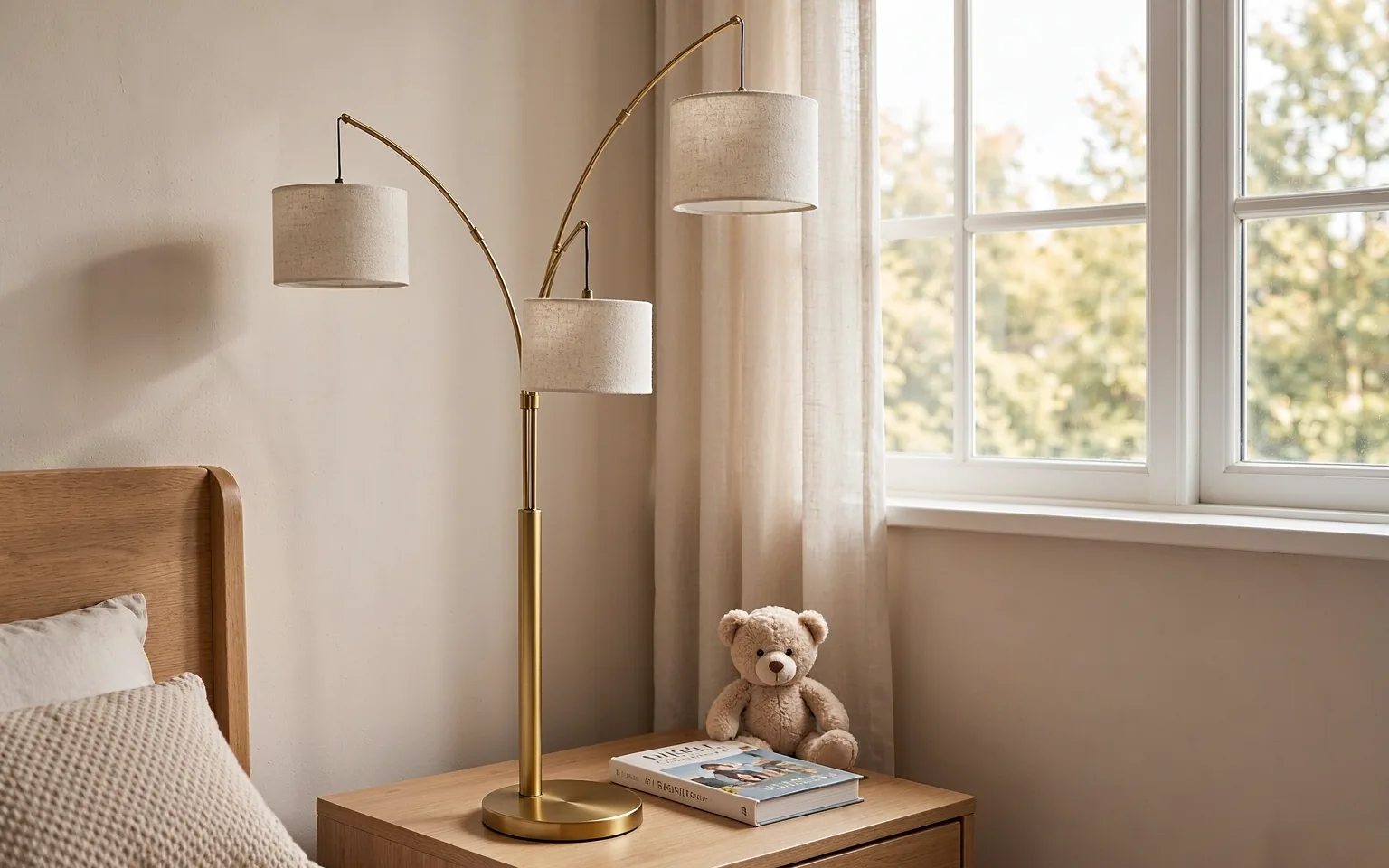
Hospitals, care homes and clinics sit in an awkward zone for portable lighting: the spaces feel residential — and are designed to feel residential, because recovery favours warmth — but the operational reality is institutional. Cleaning regimes, infection control, vulnerable users, long duty hours and inspections all apply. A lamp that would serve a hotel room for years can fail a care environment in a month, for reasons that have nothing to do with style. Specifiers who understand the difference write better packages and avoid refits.
The cleaning regime is the specification
The first question for any healthcare portable lamp is not how it looks but how it is cleaned. Patient-adjacent surfaces are wiped on aggressive schedules with chemicals that would never touch a hotel nightstand. Porous shade materials, unsealed wood, textured finishes with crevices, and anything that traps dust near a heat source all age badly under that regime.
The implication is counterintuitive: the most hotel-like lamp is often the wrong lamp, and the right lamp is one whose materials read warm while behaving like equipment. Sealed finishes, smooth shade materials, minimal seams and stable construction are the healthcare priorities. Our cleaning and care guide for lamps describes maintenance generally; the healthcare version of it is a daily routine, which resets every material decision.
Users who cannot be assumed able-bodied
Hotels can assume most guests can reach, see and operate a standard lamp. Healthcare cannot. Controls need to be operable from a bed or a wheelchair, findable by low vision and forgiving of trembling hands — which is why our accessible lighting controls guide treats switch placement and type as specification items rather than details.
Stability matters more too. A lamp that a reaching hand can pull over is a hazard in a room where the person reaching may be unsteady. Weighted bases, low centres of gravity and sensible cord routing — our tip-over and cord safety guide covers the household version — become requirements rather than preferences when the user population is vulnerable.
Light that serves both rest and care
Patient rooms must support two opposite needs in one small floorplan: rest, which wants dim and warm, and care tasks, which want bright and accurate. Portable lamps are the flexible layer in that balance — an ambient source that dims low for evening, a task source for reading and examinations, without the institutional ceiling brightness that makes rooms feel like corridors.
Our senior living lighting guide covers the older-eye dimension, which applies directly: higher ambient levels than young eyes want, high colour rendering for medication and skin assessment, and warm evening tones that protect rest. The clinic waiting room guide handles the public-face version of the same building.
Duty cycle and documentation
Healthcare interiors run longer hours than any hospitality application: rooms occupied around the clock, lamps on for shifts rather than evenings. Duty cycle — how many hours a day a lamp is built for — moves from a footnote to a selection criterion, which our duty cycle explainer unpacks. Components that fail first under long hours are the ones worth checking: drivers, switches, cord strain relief.
Documentation expectations are also heavier. Facilities teams ask for specification records for everything in a patient environment, and inspections can follow. The supplier who can produce a complete compliance file — our compliance file guide describes what one holds — is materially easier to specify into healthcare than one who cannot.
Where Anrotix fits healthcare programmes
Anrotix supplies healthcare and senior-living projects alongside hospitality and retail buyers: a portable-luminaire range built to ETL listed to UL 153 and CSA C22.2, 120V with E26 bases and US plugs, held in United States stock and orderable from ten units with mixed SKUs. Models with sealed finishes, weighted bases and simple, reachable controls are the natural starting point for care environments, and specification documentation is available with the quote.
Send the room types, cleaning regime and control requirements to help@anrotix.cn and we will propose the models that fit — and say plainly which of our range is not right for the environment.
Frequently asked questions
Can standard hotel-style lamps be used in patient rooms?
Sometimes, but the cleaning regime decides. Daily chemical cleaning destroys porous shades and unsealed finishes quickly. Healthcare specifiers choose lamps whose materials read warm but behave like sealed, wipeable equipment.
What safety features matter most in care environments?
Stability and reachable, simple controls: weighted bases and low centres of gravity against pulls and tremors, and switches operable from a bed or wheelchair. Cord routing follows, since trailing cords are a falls risk.
Do portable lamps in healthcare need special certification?
Portable lamps fall under the portable luminaire safety standard in North America — our range is built to ETL listed to UL 153 and CSA C22.2. Facility-specific requirements vary by project, so confirm the specification with the facility team and ask suppliers for the compliance documentation.
Sourcing lamps for your business?
We stock the Anrotix range in the United States — complete with LED bulbs and accessories — and supply from 10 units, mixed across SKUs.
Request wholesale pricingRelated product: the wood table lamp with USB charging — nightstand-friendly, with charging built in — often specified for care and patient rooms
Recruiting regional partners worldwide — help@anrotix.cn