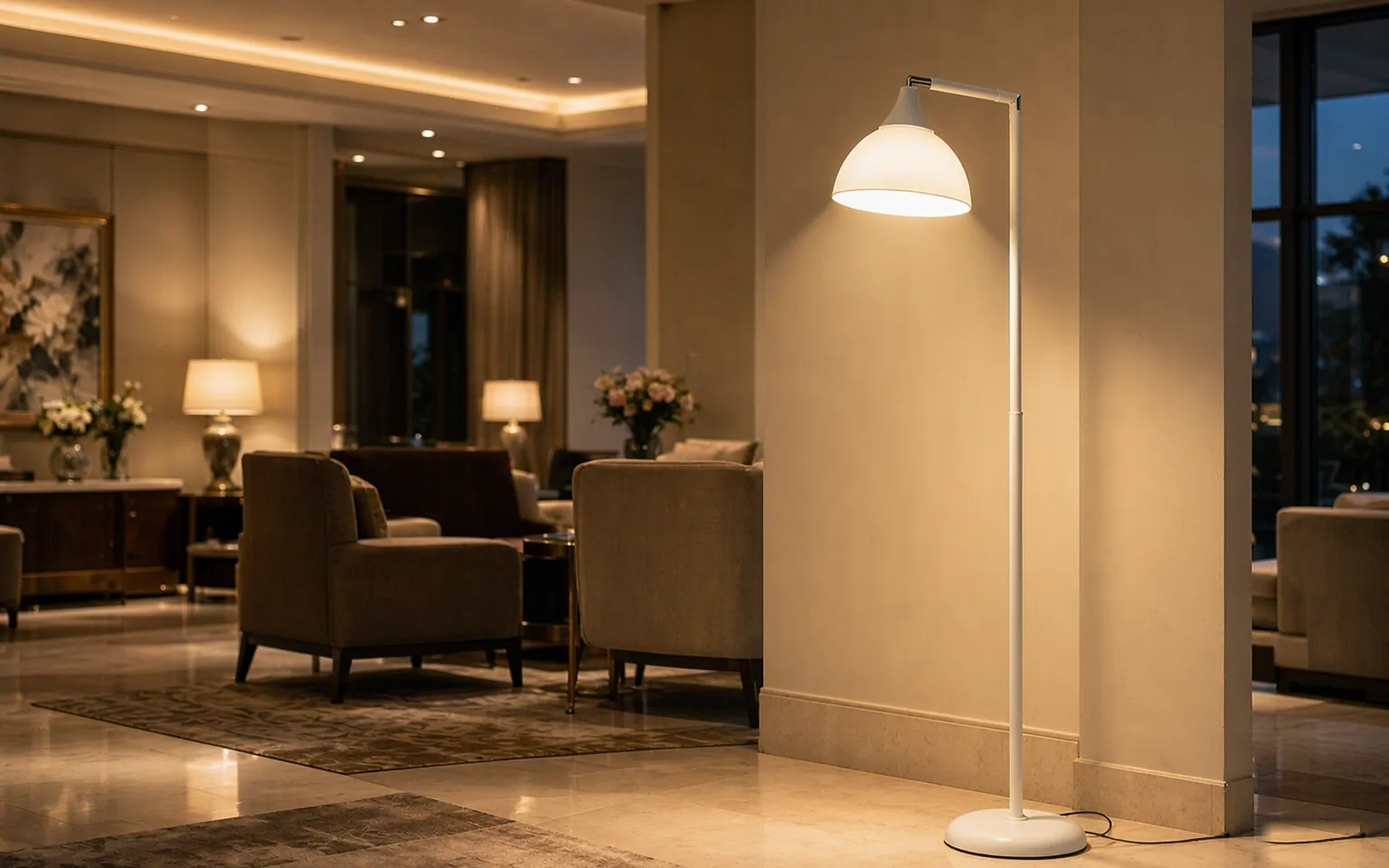
Buyers compare lamp lifespans in hours and forget the hours per day. A lamp rated for 25,000 hours lasts a decade in a guest room that runs it three hours an evening, and under two years in a lobby that runs it sixteen. Duty cycle — how hard and how long the lamp works each day — is the number that decides whether a specification holds up in a commercial space.
Residential versus commercial load
A home lamp is used in bursts: an evening read, a few hours of ambient. A commercial lamp in a lobby, corridor or amenity space is on for most of the waking day and often into the evening. Same rated life, wildly different calendar outcomes, because the commercial unit burns through its hours far faster.
Cleaning and care extend both, but they do not change the load. Our Cleaning and Caring for Lamps guide covers the upkeep; duty cycle is the usage side that upkeep cannot offset.
Heat is the duty-cycle tax
The harder a lamp runs, the warmer it runs, and heat is what shortens LED life and stresses drivers. A shade that traps heat, or a location with no air movement, pushes a commercial lamp past the conditions its rating assumed. The failure shows up as early dimming and driver faults rather than sudden death.
When a lamp does fail, the pattern points at the cause. Our Fault-Finding Checklist for LED Lamps guide helps separate a duty-cycle failure from a genuine defect — which matters for warranty and for sizing spares.
Sizing spares to the cycle
A property that runs lamps hard needs more spares per hundred units than one that runs them gently, because the early-failure tail arrives sooner. Treating spare holding as a fixed percentage ignores duty cycle and leaves the busy spaces short first.
Our Spare Parts: The Cheapest Loyalty Programme article frames the strategy; the cycle is the input that sets the number, not the other way around.
What Anrotix builds to
Our portable luminaire range is built to ETL listed to UL 153 and CSA C22.2, 120V with E26 bases and US plugs, held in United States stock so a high-cycle property can replenish from domestic inventory. Duty-cycle expectations are provided on request with the listing evidence.
Wholesale pricing is tiered by volume and quoted rather than published — send the model list, operating hours and target quantities to help@anrotix.cn and we will return landed options sized to the duty cycle you actually run.
Frequently asked questions
What is a lamp's duty cycle?
It is how many hours per day the lamp actually runs, not just its rated lifespan in hours. A guest-room lamp and a lobby lamp can share a rating yet reach end-of-life years apart because one runs a few hours and the other runs most of the day.
Why does heat shorten a commercial lamp's life?
The harder a lamp runs, the warmer it gets, and heat is what degrades LEDs and stresses drivers. A trapped-heat shade or a still location pushes the unit past the conditions its rating assumed, showing up as early dimming and driver faults.
How does duty cycle change spare-part planning?
A property running lamps hard hits the early-failure tail sooner, so it needs more spares per hundred units than a gently used space. Treating spare holding as a flat percentage leaves the busiest areas short first.
Sourcing lamps for your business?
We stock the Anrotix range in the United States — complete with LED bulbs and accessories — and supply from 10 units, mixed across SKUs.
Request wholesale pricingRelated product: the models held in United States stock — 120V portable lamps with E26 bases and US plugs, orderable from ten units with mixed SKUs
Recruiting regional partners worldwide — help@anrotix.cn