Last reviewed: Sep 15, 2026
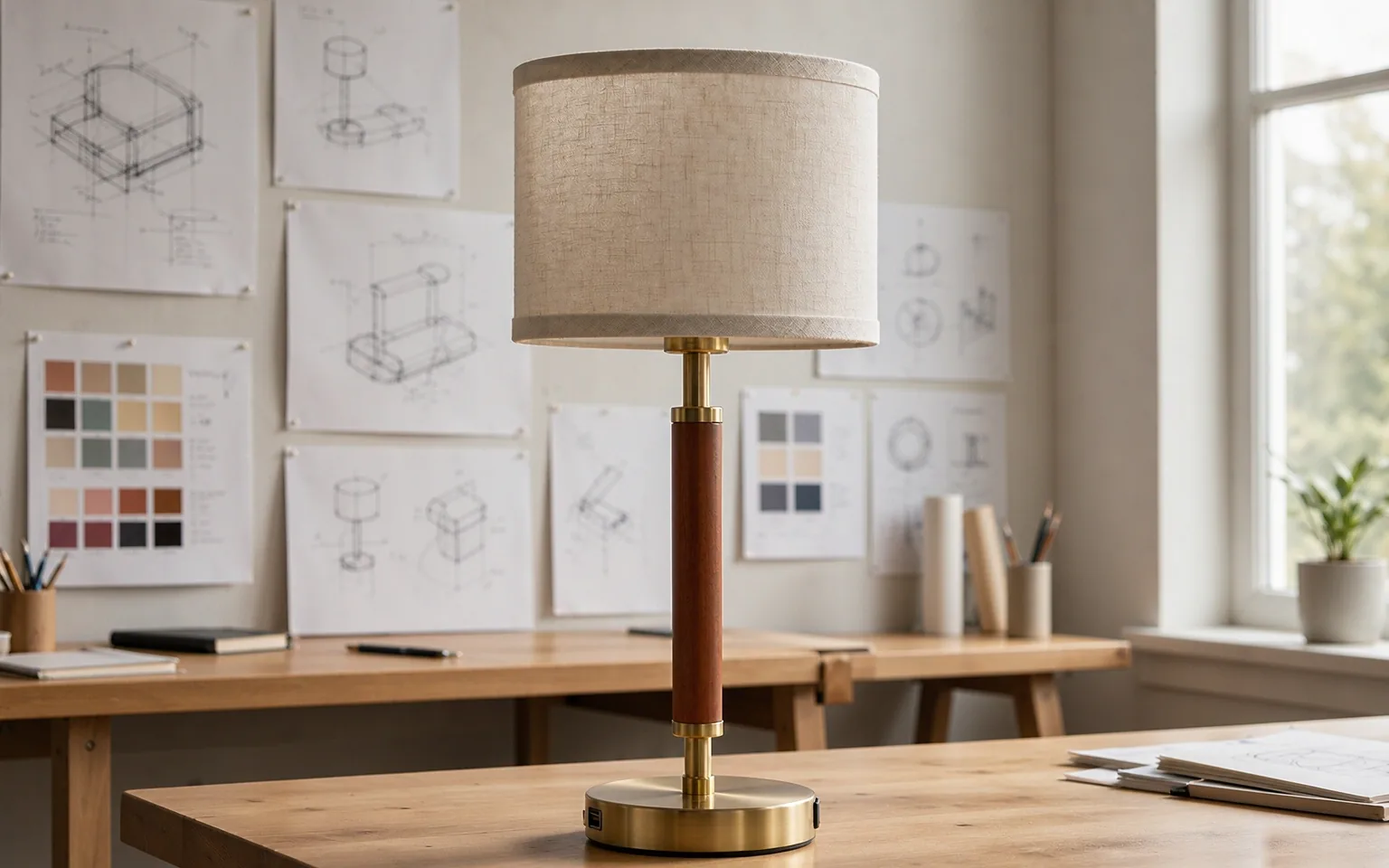
A floor lamp is a tall, top-heavy object standing in a room with children, pets and people who do not look where they are walking. Stability and cord management are the two engineering responses, and both are evaluated as part of the safety listing.
What the stability requirement asks
The product is evaluated in the positions it is intended to occupy, with a force applied as if a person leaned or a pet pushed. A design passes or fails on the combination of base mass, base diameter and the height of the centre of gravity, which is why a heavy low base is worth more than an aesthetically lighter one.
Table lamps tip too
A tall table lamp with a narrow base on a nightstand is a tipping risk, particularly in a household with young children pulling at a cord. Base diameter relative to overall height is the practical measure, and it belongs in the specification rather than in a marketing photograph.
| Product | Practical stability measure | Common failure |
|---|---|---|
| Floor lamp | Base diameter and mass against height | Narrow base, tall column |
| Table lamp | Base diameter relative to shade | Tall shade on a small base |
| Arc lamp | Base mass against reach | Long arm, light base |
| Cordless lamp | Tip test in all usable positions | Top-heavy, easy to knock |
Cords are the entanglement risk
Cord length, exit height from the base and whether a cord lies across a walkway determine how often a lamp is pulled over. Short cords routed behind furniture are safer than long cords reaching across a floor, and a cord keeper is a cheap addition that changes the outcome.
What the label must say
Required warnings and instructions on placement are part of the listing. Buyers should confirm the label artwork is current, because a warning omitted at the print stage is a compliance gap that is invisible on the container and obvious in an audit.
Design it, then test it
Stability and cord routing are decided in the design of the base and the stem, not in a testing laboratory. A manufacturer who cannot describe the base mass and the centre of gravity has not designed the product for the room it will be used in.
Frequently asked questions
How can floor lamps be made tip-over resistant
A stable base sized to the lamp's height and reach, a low center of gravity, and a base weight appropriate to the shade and arm keep most floor lamps from tipping in normal use. Tall or arched models need proportionally heavier or wider bases to stay stable.
What cord safety points matter for portable lamps
The cord needs proper strain relief where it enters the base, adequate gauge for the load, and no path where it is pinched or a trip hazard. These are part of the construction evaluated under UL 153 for a listed portable lamp.
Are there stability expectations buyers should ask about
Ask the supplier to confirm the base design was evaluated for stability as part of the listing, and avoid designs where the shade or arm overhang far exceeds the base footprint. For public spaces, a stable, low-trip design reduces both injury and replacement risk.
Sourcing lamps for your business?
We stock the Anrotix range in the United States — complete with LED bulbs and accessories — and supply from 10 units, mixed across SKUs.
Request wholesale pricingRelated product: 3-light arc floor lamp — a weighted arc base, the stability detail this article is about
Recruiting regional partners worldwide — help@anrotix.cn