Last reviewed: Sep 15, 2026
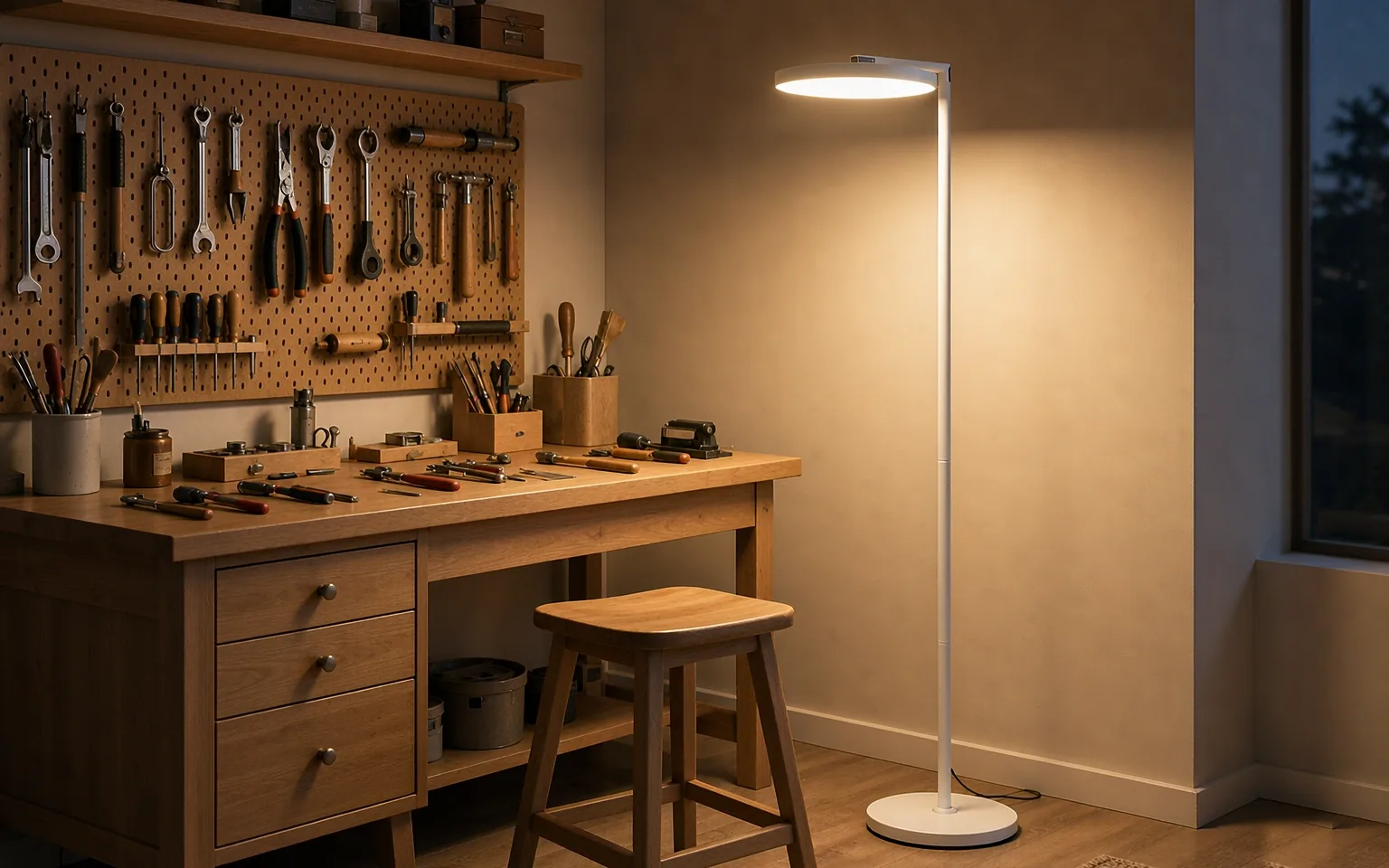
A first container of floor lamps is rarely lost to one big mistake. It is lost to four or five small ones: a classification that was guessed, a carton that was quoted on volume instead of dimensional weight, a sample approved verbally, an inspection booked after the goods were already packed. Here is the sequence that avoids them.
Decide what you are importing before you look for a factory
Floor and table lamps are portable luminaires, and for the US market that means a safety listing to UL 153 and CSA C22.2 is what buyers, retailers and inspectors ask for. Confirming that the models you intend to import carry that coverage is the first task, not the last one.
Voltage and plug type are the second. A lamp built for 120V/60Hz with a US plug is what the North American market expects; asking for a different configuration is a factory-order conversation, not a stock one.
Write these requirements into the enquiry rather than assuming them. Suppliers quote what is asked for, and a quote that silently assumes a different configuration will not be caught until the goods arrive.
Classification comes before price
Every lamp entering the United States needs a Harmonized Tariff Schedule classification, and that number drives the duty rate and any additional measures that apply. Guessing it, or reusing a number a freight forwarder suggested for a different product, is the most common first-import error.
HTS Codes for Lamps: Getting the Classification Right explains how portable luminaires are generally treated and why the material and construction of the lamp can change the answer.
Duty is not the only cost attached to that number. Tariffs and Lighting Imports: How to Plan Around Them covers the additional measures that have applied to lighting lines and why the landed cost model should carry a contingency rather than a single fixed figure.
The sample round is where specifications get locked
A production sample is not a formality. It is the physical reference against which the whole order will be judged, and once it is approved the factory is entitled to build to it.
Approve it in writing, with the finish, shade, cord, plug, switch type, bulb inclusion and carton markings all named. Photograph it and keep the photographs with the order file, because a dispute six weeks later is settled by whichever side has the better record.
The Sample Round: How to Order, Evaluate and Sign Off a Lamp Before Volume walks through the sequence in detail.
Packaging decides the freight bill more than the lamp does
Floor lamps are long, light and awkward. Carriers price on dimensional weight as well as actual weight, so a tall carton can cost far more to move than its contents weigh.
Ask for the carton dimensions and the units-per-carton count before you quote freight, and ask whether the carton has been drop-tested. Carton Design: The Cheapest Place to Save Money on a Lamp and Preventing Transit Damage Before It Happens both sit in this part of the plan.
A container plan is worth doing early too. Loading a Container of Lamps: Where the Last Twenty Units Come From shows how small carton changes move the unit count at the top of a container.
Inspect before the container closes
An inspection booked after the goods are packed can confirm carton count and outward condition, but it cannot fix a finish that was wrong on day one. Book it during production for a first order, and confirm that the safety markings, rating labels and cord tags on the actual units match the documentation.
Factory Inspections for Lighting: What to Check and When sets out what a lighting inspection should cover, including the checks that are specific to portable luminaires.
Then the paperwork, in this order
Most first-import delays are document delays. The goods are sitting at the port while someone reconciles two numbers that disagree by one carton.
- Commercial invoice and packing list that match each other exactly, including carton count and weights.
- Classification confirmed before the goods sail, not after they land.
- Safety listing documentation for the specific models in the shipment.
- Country-of-origin marking that is already on the carton and the product, not applied at the destination.
- A customs broker appointed before the vessel sails rather than during the voyage.
Where Anrotix fits
Anrotix holds its own range of 120V floor and table lamps in stock in the United States, from ten units with mixed SKUs, dispatched within one business day and typically delivered in three to seven business days. For a buyer who does not want to run a first container, that is the alternative to the whole sequence above.
For buyers who do want a factory programme — custom finishes, private-label packaging, 230V configurations for export markets — the factory minimum applies and the specification is quoted per project. Send the requirement with an enquiry and it will be priced as a programme rather than a stock order.
If you are weighing a first container against buying ex-stock, email help@anrotix.cn with the models and quantities. We will quote both paths so the comparison is made on numbers rather than on optimism.
Related reading
- How to Build a Landed Cost Model for a Lighting Order
- The Import Calendar: Where Six Weeks Disappear
- Incoterms for Lighting Orders, in Plain Language
Frequently asked questions
What is the hardest part of a first lighting import?
Usually the documentation and the packaging decision, not the manufacturing. Classification and carton dimensions set the duty and the freight cost long before the goods move.
Do imported lamps need a safety listing for the US?
Portable luminaires are expected to carry a listing to UL 153 and CSA C22.2, and retailers and inspectors ask for it. Confirm model-level coverage before the order, not after.
Is there a way to avoid a first container entirely?
Yes. Buying from a US stockist in small mixed quantities tests the category without the lead time, the duty exposure or the container economics.
Sourcing lamps for your business?
We stock the Anrotix range in the United States — complete with LED bulbs and accessories — and supply from 10 units, mixed across SKUs.
Request wholesale pricingRelated product: 76-inch torchiere with a folding head — a tall model that shows why carton length drives the freight bill
Recruiting regional partners worldwide — help@anrotix.cn