Last reviewed: Sep 15, 2026
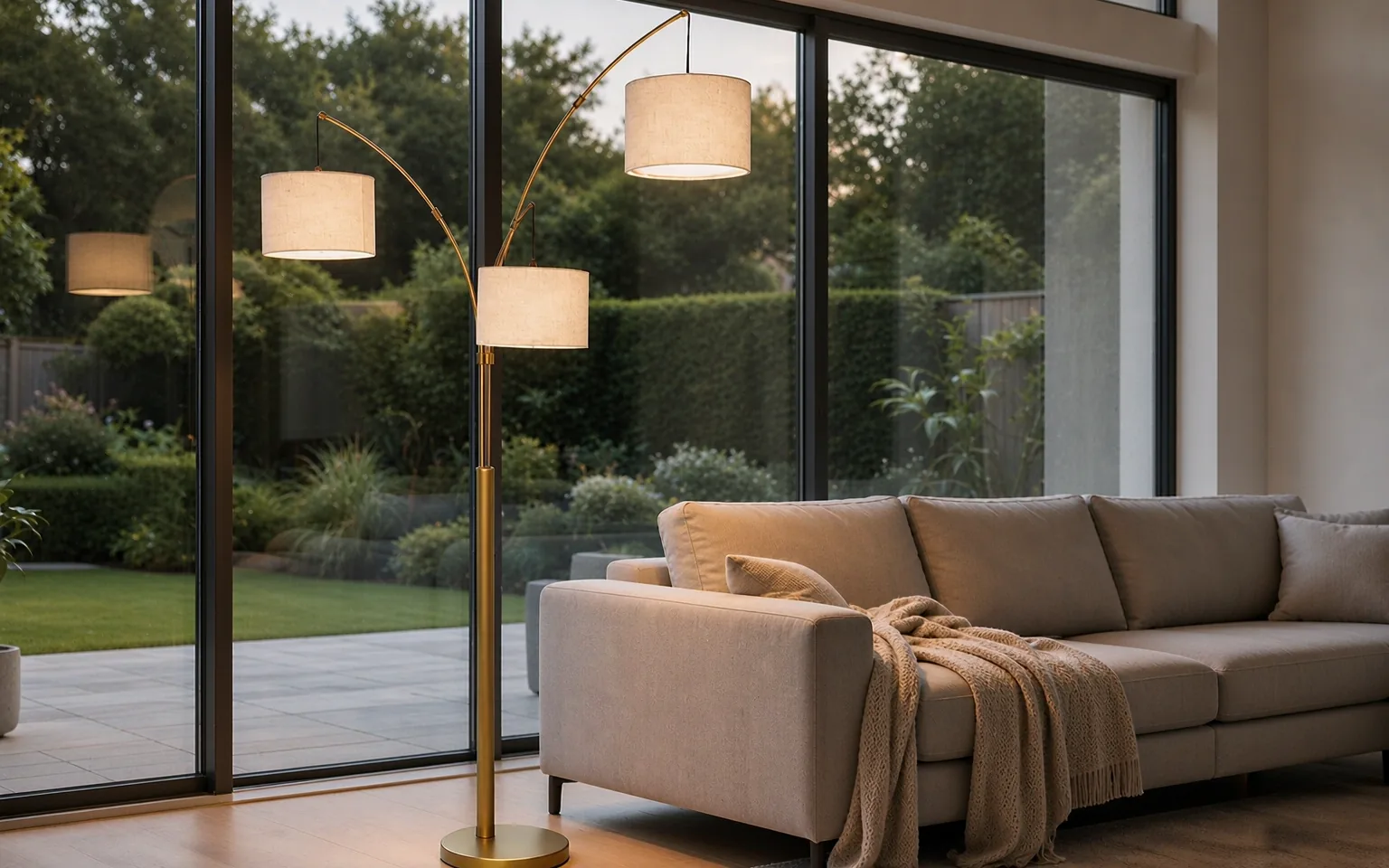
Ask a designer about lamp bodies and the answer is about appearance. Ask a buyer who has run the category for three seasons and the answer is about weight, carton volume, finish consistency between batches, and what happens to the material in a humid room or a hot container. Both are right, and the procurement answer is the one that determines margin. This article compares metal and wood bodies on the criteria that actually differ — weight and stability, consistency, durability, freight, and the way each material ages — so the choice can be made per programme rather than per mood.
Weight and stability
The first consequence of body material is mass, and mass is what keeps a tall lamp upright. A metal column with a weighted base is the simplest way to make a floor lamp stable without a large footprint, which matters in apartments, hotel rooms and anywhere floor space is contested. Wood achieves weight differently — through a solid or composite base — and tends to distribute it lower and wider.
For any tall or cantilevered design, treat stability as an engineering question rather than a material preference. The physics is set out in the engineering behind an arc lamp that does not tip, and it applies regardless of what the body is made of: it is the relationship between base mass, arm reach and head weight that tips a lamp, not the material.
Consistency between batches
This is where the two materials diverge most, and it is the difference that costs money. Metal finishes are applied and can be controlled to a tolerance; a powder coat or plating can be matched against a reference sample batch after batch. Wood is a natural material: grain, colour and figure vary between pieces, and between trees, in ways that cannot be fully controlled.
That variation is not a defect — it is often the reason the material was chosen — but it is a specification risk. If your customers compare two units side by side on a shelf or in adjacent hotel rooms, variation reads as inconsistency. If they buy one lamp for one room, variation reads as character. Decide which situation you are selling into before you choose.
| Consideration | Metal body | Wood body |
|---|---|---|
| Finish consistency | High, matchable to a reference sample | Varies by piece and batch |
| Weight at a given footprint | High, especially with a filled base | Moderate, usually lower and wider |
| Resistance to humidity | Good, subject to the finish quality | Needs a stable finish; movement is possible |
| Repairability of surface damage | Touch-up or refinish possible | Scratches and dents are harder to hide |
| Perceived value at a price point | Reads as modern or contract | Reads as warm or residential |
| Freight sensitivity | Heavier, so carton weight matters more | Lighter per unit of volume, but bulkier |
If your channel sells pairs — bedside lamps, matching living room units — put consistency at the top of the list. Variation that looks charming in one unit looks like a fault in a matched pair.
Durability in the room, and in transit
Metal dents and its finish can chip; wood dents more easily and its finish can mark with water or heat. Both are recoverable in normal use and both are damaged by the same thing in transit: insufficient internal protection. Material choice matters less to damage rates than carton design does, which is why the transit damage prevention work pays off regardless of which body you specify.
The durability question that does differ is humidity. In a coastal property, a bathroom-adjacent bedroom or an unconditioned space, a wood body needs a stable finish and some tolerance for movement. Ask the supplier what finish system is used and whether the range has been used in similar conditions rather than assuming the answer.
Care, cleaning and the customer's first year
Lamps are cleaned by customers and by housekeeping, and the material determines how forgiving that is. Metal bodies tolerate a damp cloth and most common cleaners; wood bodies want a dry or barely damp cloth and are less forgiving of whatever is in the cleaning cupboard. In hospitality, where cleaning products are chosen centrally and applied quickly, this is a real specification input.
The maintenance guidance that applies to both is covered in cleaning and caring for lamps and shades. Where the same range mixes materials, the guidance on mixing materials and finishes is worth reading before committing to a mixed assortment.
What to specify per programme
As a working rule: metal for contract and hospitality programmes where consistency, cleaning tolerance and damage resistance dominate; wood for residential programmes where warmth and material character are the selling point and customers are buying a single unit. Mixed assortments work well when the split is deliberate — wood in the bedroom categories, metal in contract and task categories — rather than random across the range.
Check the assortment against your price ladder as well, because material choice drives the perceived value at each rung; the mechanics are set out in building a lamp assortment around a price ladder.
Questions to put to the supplier
Three questions separate a considered range from an opportunistic one. What finish system is used, and can it be matched to a reference sample on reorder? What is the base construction, and what does the unit weigh? And what has been done to protect the body in transit — specifically, not in general.
If you are weighing the two materials for a specific programme, send the application, the channel and the volumes to help@anrotix.cn or use the contact page; the range covers both, and samples are the fastest way to settle a material question that a specification sheet cannot.
Order samples in every finish you intend to stock. Material behaviour under your own lighting, in your own room, settles the question faster than any comparison table — including this one.
Frequently asked questions
Which material is better for a hotel programme?
Metal, in most cases, because consistency across rooms and tolerance of centralised cleaning matter more in contract work than material character does. Wood works well in boutique properties where variation is part of the design intent.
Does wood move or crack in a humid climate?
A properly finished wood body is stable in normal interior conditions, but extreme or unconditioned humidity is a genuine risk. Ask what finish system is used and whether the range has been supplied into similar climates before specifying.
Is a heavier lamp always more stable?
No. Stability depends on where the mass is relative to the reach of the arm or head. A heavy head on a light base tips more readily than a moderate head on a properly weighted base, regardless of body material.
Sourcing lamps for your business?
We stock the Anrotix range in the United States — complete with LED bulbs and accessories — and supply from 10 units, mixed across SKUs.
Request wholesale pricingRelated product: 30W Torchiere with a Folding Head — a metal-bodied model where finish matching on reorder is straightforward
Recruiting regional partners worldwide — help@anrotix.cn