Last reviewed: Sep 15, 2026
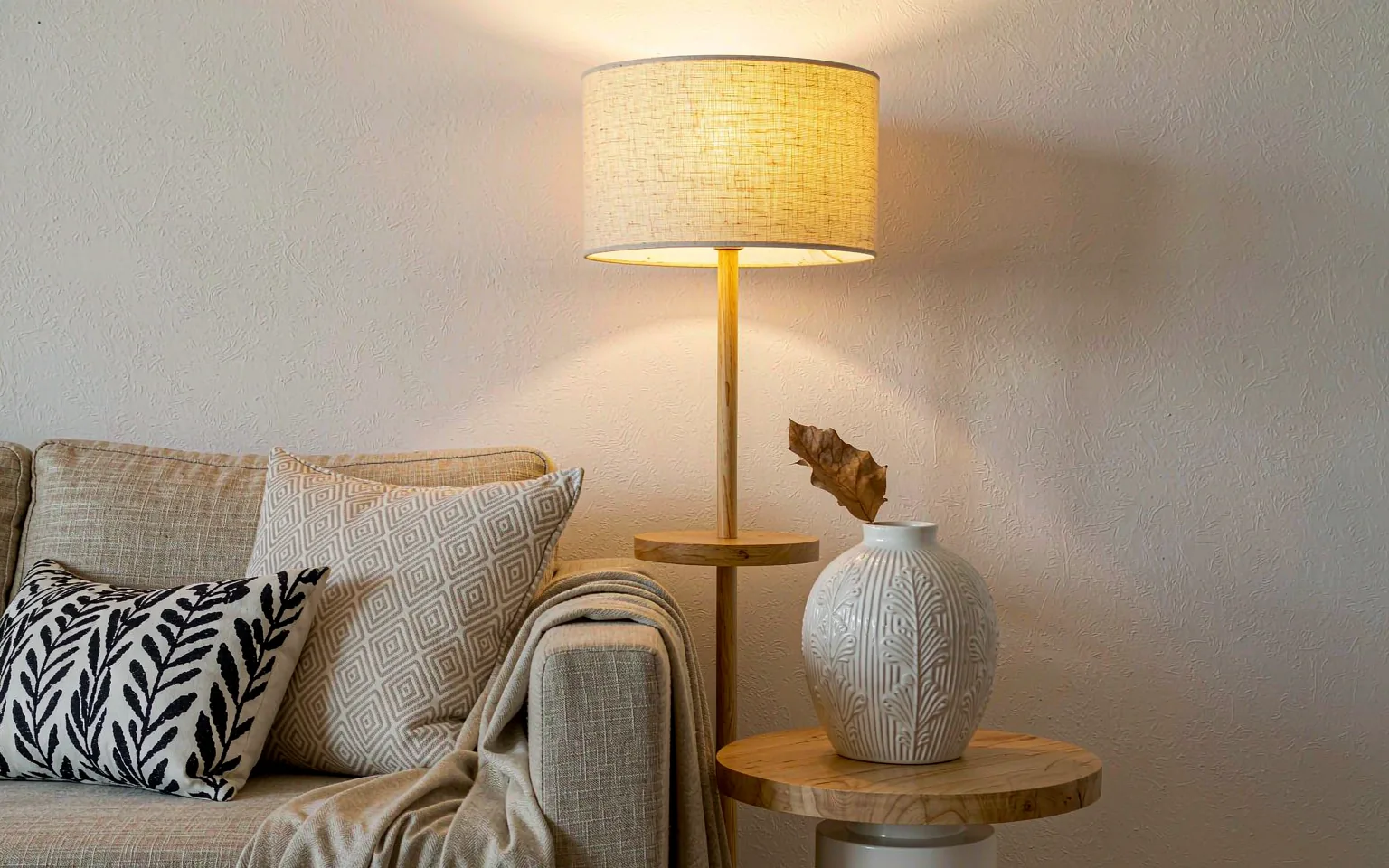
Multi-head floor lamps read as a styling choice, and buyers often select them the way they would select a colour. In use they solve a different problem. One shade gives a single pool of light in a single direction; three give directional light you can aim, at the cost of a larger visual footprint and more sockets to service. Neither is better in the abstract, but each is clearly better in particular rooms, and choosing by appearance rather than by behaviour is how rooms end up with a lamp that technically fits and does nothing useful.
What each design actually does to the room
A single-shade lamp creates one pool. Its usefulness depends almost entirely on placement: the shade height relative to seating, the distance the light has to travel, and whether anything blocks it. Get those right and one shade is sufficient for reading; get them wrong and no amount of wattage compensates.
A multi-head design spreads the same light across several positions and lets each head be aimed independently. That means it can serve two seats from one base, or light a reading chair and a nearby surface from one cord. The trade is that each head is individually dimmer than one larger shade would be at the same total light output.
That distinction matters in rooms where one lamp has to serve two people, which is why multi-head designs are common behind sofas and not particularly useful beside a single armchair. Our height guide walks through the placement geometry that decides whether any of this works.
Footprint, reach and what they collide with
Reach is the main argument for an arc-style multi-head lamp: the heads are held over the seating while the base stays behind it. That is genuinely useful where a socket is not near the seating, or where a table would otherwise be occupied by a lamp rather than by whatever else belongs there.
It is also where mistakes happen. A long reach needs base mass, and base mass needs floor space. Our piece on arc lamp stability explains the trade; for buying purposes, measure the available floor area at the base location before falling for the reach, because a base that has to sit half under a sofa is compromise waiting to be knocked.
Single-shade lamps are far more forgiving here. They work in narrow gaps, beside consoles and in corners, which is why a specification that includes both types usually produces a better result than committing to one.
Running costs nobody quotes
Three sockets means three lamps to buy, stock and replace rather than one. In a single property that is a minor nuisance; across several hundred rooms it is a recurring procurement line and a larger spares holding. It also means three failure points and more contacts with the same uptime expectations.
There is a control question too. Multi-head lamps frequently have one switch for all heads, sometimes with a rotary dimmer; some have individual switches per head. Decide which you want before ordering, because it changes how the lamp behaves at the bedside or behind a sofa, and because retrofitting a control preference later is not practical.
Finally, consider dimming behaviour. Multiple heads dimming from a single control behave differently from a single lamp on the same control — worth checking if the lamp will be used in reading positions where the dimming range matters.
Choosing per application rather than per range
In a hospitality guest room, a single-shade lamp beside a chair is usually right, and a multi-head lamp behind a sofa in a suite may be, depending on whether two people realistically read there. In most properties the honest answer is a mix, weighted toward whichever reading position actually gets used.
In retail, the two types behave differently on the floor. A multi-head lamp draws attention and photographs well, which helps it sell; a single-shade lamp is easier to demonstrate because it has less explaining to do. Assortments usually need both, and the ratio depends on how much of your business is online versus in-store.
For specifications that will repeat, prefer whichever type you can reorder consistently. Our comparison page lists heights, base types and control types for the current range specifically so that this choice can be made against dimensions rather than photographs.
Trying both without committing
The cheapest way to settle this question is to put both types in a room and use them. Our wholesale minimum is ten units and SKUs can be mixed, so a property can trial a few single-shade units and a few multi-head units in the same order rather than selecting from a catalogue.
Anrotix holds stock in the United States, so a trial and the follow-up order are separated by days rather than by a production cycle. Both types are 120V with E26 sockets and US plugs, with the portable luminaire range built to ETL listed to UL 153 and CSA C22.2; certificate copies and the models covered are available on request. Send your room mix and target quantities to help@anrotix.cn for tiered pricing.
Frequently asked questions
Does a three-head lamp light a room more brightly than a single-shade lamp?
Not necessarily. Total light output depends on the lamps fitted and the shades used, and a single larger shade can deliver comparable output in one direction. The advantage of multiple heads is distribution and aiming — serving more than one position from one base — rather than raw brightness.
Are multi-head floor lamps stable enough for guest rooms?
Well-designed ones are, provided the base has adequate mass for its reach and the lamp is placed where the reach is not fighting the furniture. The specification question is whether the available floor space allows the base to sit where the design assumes; if a sofa has to sit on top of it, the arrangement will not stay put.
Which type is easier to maintain?
Single-shade lamps. Fewer sockets, fewer shades to keep in stock, and simpler re-lamping. Multi-head lamps are not difficult to maintain, but across a large installed base the additional sockets and shade fittings translate into a measurably larger spares holding and more replacement events.
Sourcing lamps for your business?
We stock the Anrotix range in the United States — complete with LED bulbs and accessories — and supply from 10 units, mixed across SKUs.
Request wholesale pricingRelated product: a three-light arc floor lamp — 120V multi-head design with E26 sockets and a US plug, held in United States stock
Recruiting regional partners worldwide — help@anrotix.cn