Last reviewed: Sep 15, 2026
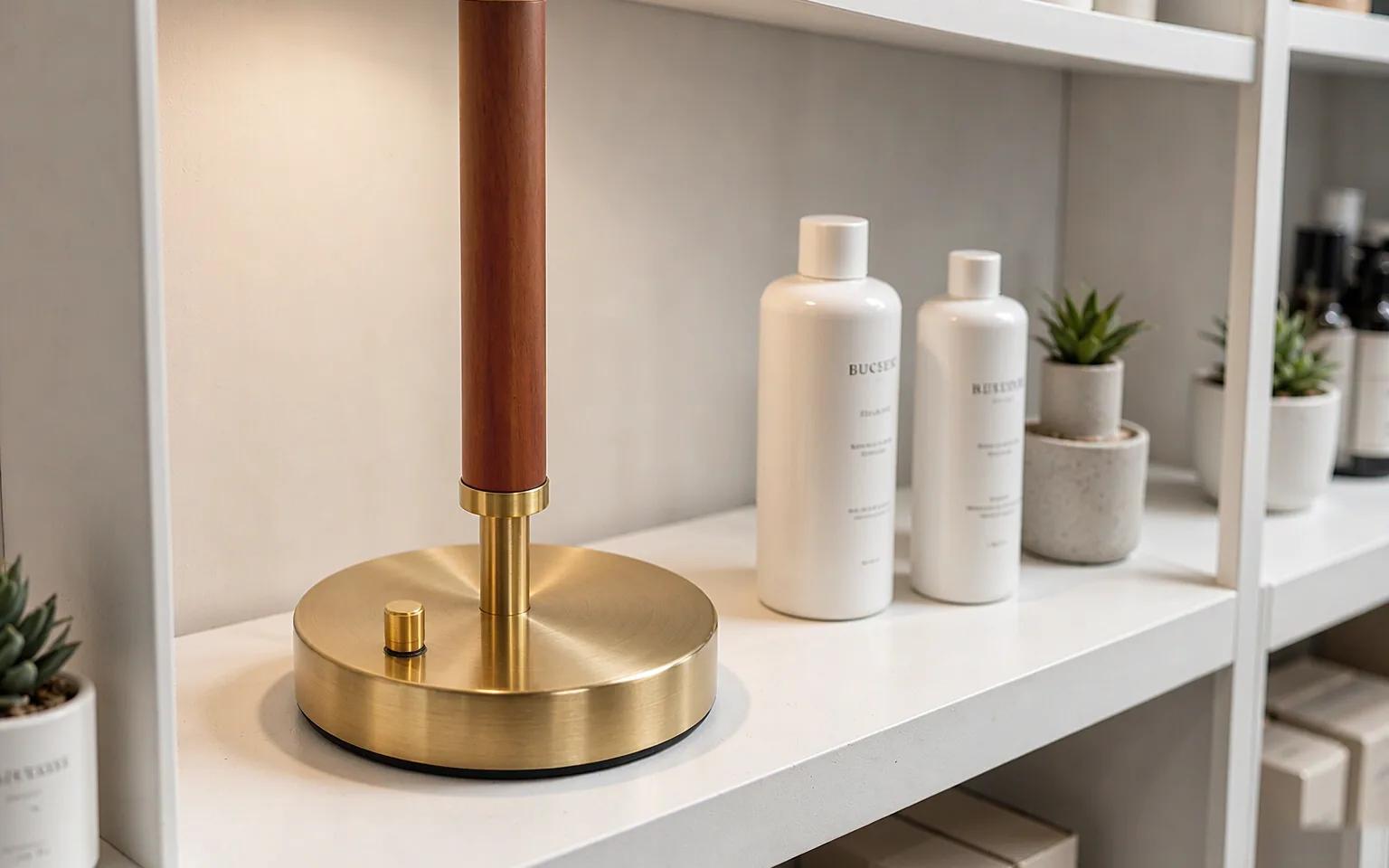
Colour rendering is sold to homeowners as 'how true the colours look,' and for a residence that is the right frame. For merchandising it is the wrong frame. A display lit to flatter a room can flatten or distort the very products it is meant to sell. The lamp chosen for ambience and the lamp chosen to make merchandise read correctly are often different lamps, and conflating them costs sales.
Rendering index is the start, not the answer
CRI tells you how faithfully a light reproduces a set of test colours, and a high CRI is necessary but not sufficient for merchandising. The test colours are not your products, and a lamp that scores well on the standard swatch can still render a particular fabric or finish oddly.
For buyers signing off, the index is only the entry point. Our CRI, Explained for People Who Have to Sign Off on a Sample guide is written for exactly this sign-off moment, where a number on a box has to become a defensible choice.
TM-30 sees what CRI misses
TM-30's Rf and Rg measures capture fidelity and gamut — whether colours are reproduced accurately and whether they are rendered with appropriate saturation. For merchandise, gamut matters: a lamp that desaturates a product makes it look tired on the shelf even at a high CRI.
Our Beyond CRI: TM-30's Rf and Rg guide explains why these two numbers are showing up in specifications where CRI alone once stood — and why they matter more the closer the light gets to the product.
Warmth versus truth on the shelf
A warm residential tone that feels inviting at home can mask a product's true colour in a display. The merchandising lamp often needs a more neutral temperature to let the object speak, even when the surrounding room wants warmth. The two aims pull in different directions and the lamp has to be chosen for the nearer object.
Temperature choice is its own decision. Our 2700K or 3000K? guide frames the residential side; for a display the same dial turns toward truth over mood.
What Anrotix provides
We hold table and floor lamps in United States stock, built to ETL listed to UL 153 and CSA C22.2, specified for 120V with E26 bases and US plugs. Rendering and temperature specifications are provided on request with the listing evidence.
Wholesale pricing is tiered by volume and quoted rather than published — send the model list and target quantities to help@anrotix.cn and we will return landed options with the colour-metric data needed to light merchandise correctly.
Frequently asked questions
Is a high CRI enough for merchandising light?
It is necessary but not enough. CRI uses standard test colours that are not your products, so a high score can still render a specific fabric or finish oddly. TM-30's fidelity and gamut measures fill that gap.
Why does a warm home lamp fail on a shelf?
Warmth that feels inviting at home can mask a product's true colour in a display. Merchandising light often needs a more neutral temperature so the object reads correctly, even when the room wants warmth.
What does gamut add to the colour story?
Gamut (Rg) shows whether colours are rendered with appropriate saturation. A lamp can hit a high CRI yet desaturate a product, making it look tired on the shelf — which is exactly what merchandising light must avoid.
Sourcing lamps for your business?
We stock the Anrotix range in the United States — complete with LED bulbs and accessories — and supply from 10 units, mixed across SKUs.
Request wholesale pricingRelated product: the table and floor lamps held in United States stock — 120V portable lamps with E26 bases and US plugs, orderable from ten units with mixed SKUs
Recruiting regional partners worldwide — help@anrotix.cn