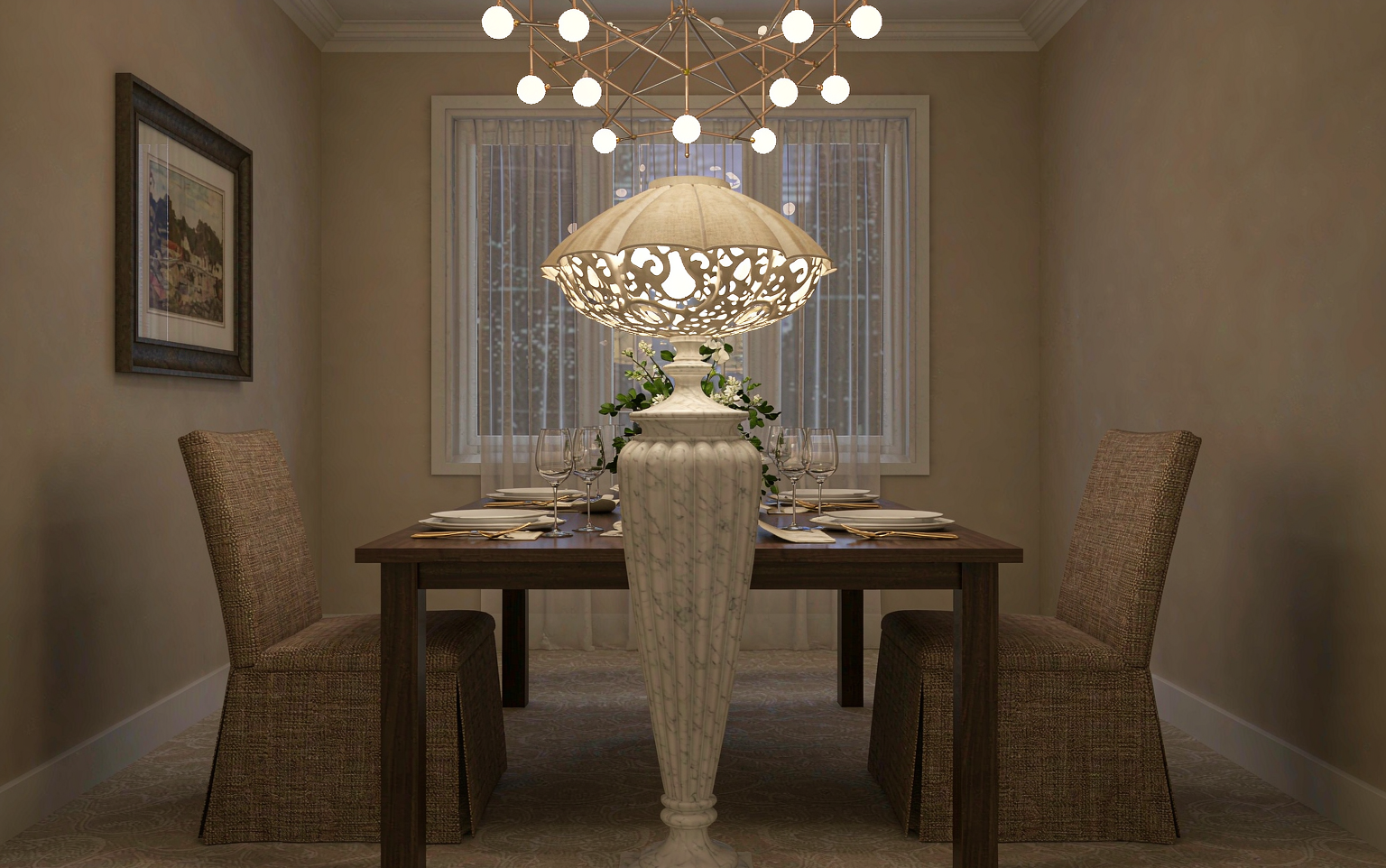
A room with no ceiling outlet is the default in a great deal of North American rental housing. The lighting that works in those rooms is not a collection of desk lamps; it is a deliberate layout of two or three portable sources doing specific jobs.
Why one lamp cannot carry a room
Without a ceiling source, a single lamp has to raise the ambient level and light the tasks, and it will produce glare at the source and shadow everywhere else. The fix is not a brighter lamp but a distribution of two or three lamps.
The three-lamp layout
A workable arrangement for a typical living room of 200 to 300 square feet:
| Position | Lamp | Job |
|---|---|---|
| Corner opposite the seating | Uplight or torchiere | Ambient level, if the ceiling is light |
| Beside the sofa arm | Task lamp with an aimed head | Reading light without glare |
| Against a wall or near a bookcase | Low table lamp | Accent and depth, and a second control point |
Plug-in switching changes the daily experience
Three lamps in three corners means three switches, which turns lighting the room into a walk. A plug-in switch or a smart plug that controls two lamps from one point makes the layout usable, and it is the difference between a plan that works and one that is abandoned.
Cord routing is the design constraint
Without a ceiling outlet, cords run along walls and behind furniture. Cord length, exit height and the placement of switches on the cord all determine whether the layout survives first contact with a vacuum cleaner.
Light ceilings make this easy
A white ceiling in a room without an overhead fixture is a large free reflector. One uplight against it can carry the ambient level for the whole room, which is why the recommendation changes completely when the ceiling is dark or beamed.
Sourcing lamps for your business?
We stock the Anrotix range in the United States — complete with LED bulbs and accessories — and supply from 10 units, mixed across SKUs.
Request wholesale pricingRecruiting regional partners worldwide — help@anrotix.cn