Last reviewed: Sep 15, 2026
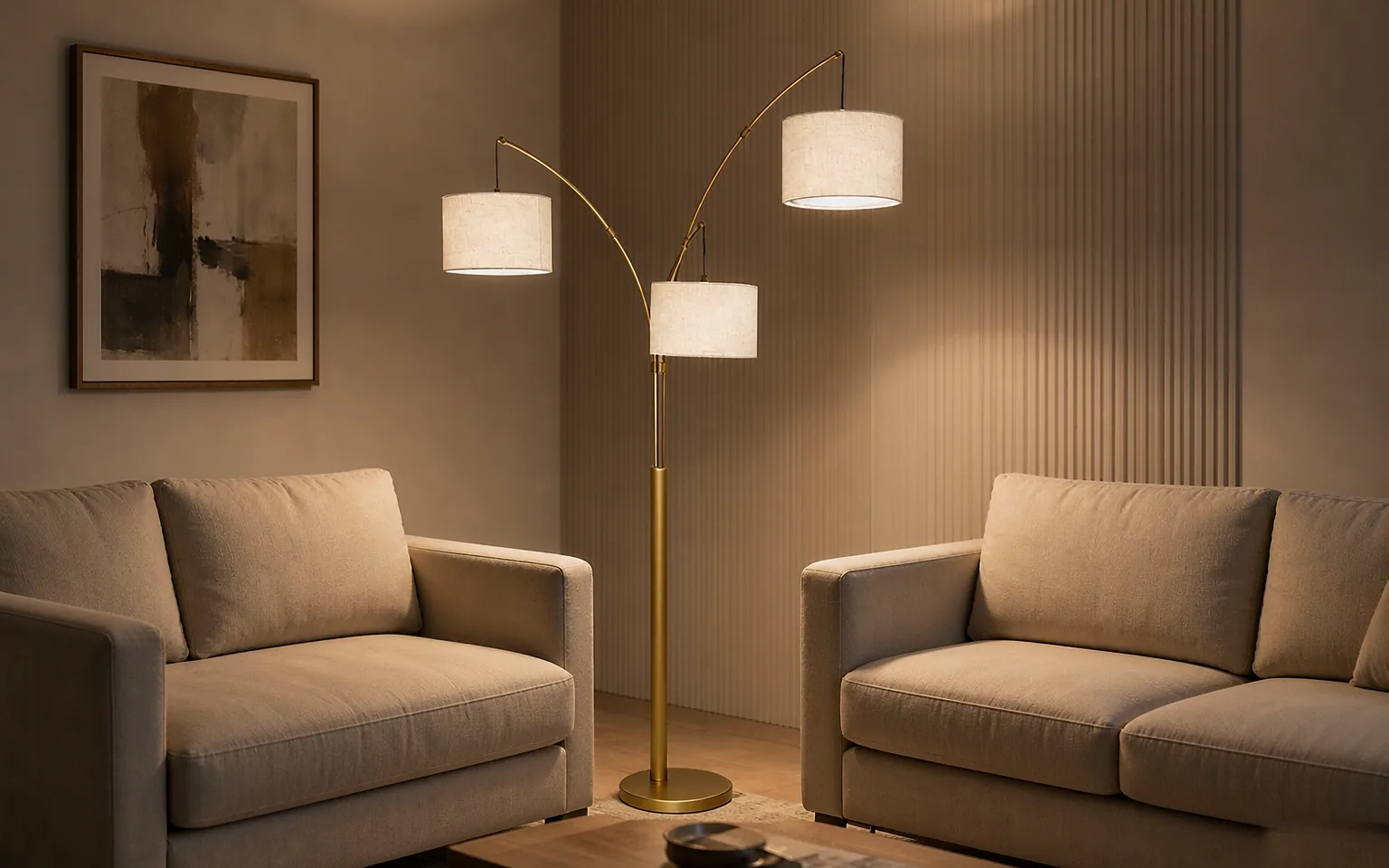
Fixed colour temperature was the old compromise: pick 2700K and live with it at every brightness. Two technologies now let a portable lamp's light shift as it dims — warm-dim, which follows the lamp down a sunset curve, and tunable white, which lets the user set colour temperature deliberately. Both are genuine upgrades. They solve different problems, and specifying the wrong one is an expensive way to learn the difference.
Warm-dim: the sunset curve, automated
Warm-dim lamps shift progressively warmer as brightness drops — from a warm white at full output toward a deeper, candle-like tone as you dim. The behaviour mimics what evening light does naturally, which is why hospitality designers like it for lounges and guest rooms: the lamp gets cosier as the evening deepens, with no user input. There is nothing to learn and nothing to adjust — the intelligence is in the curve.
The specification question is the quality of the curve and its starting point. A poor warm-dim implementation steps or jumps instead of gliding, or starts too cool to feel warm at full output. Since colour temperature is the dimension doing the work, our colour temperature guide is the vocabulary to bring to the conversation, and our CRI explainer covers the colour-fidelity dimension that good dimming should not sacrifice.
Tunable white: deliberate control, more moving parts
Tunable white separates colour temperature from brightness entirely: the user or a scene controller sets the CCT, from a cool, focused tone for tasks to a warm, relaxed one for evenings. That is the right tool where one space serves genuinely different jobs — a reading corner that wants focus at noon and warmth at midnight, or a room that must photograph well and then host well.
The costs are control complexity and consistency risk. Every tunable installation needs a control path — app, remote or wall control — and every control path is a compatibility question. Our lamp controls comparison frames the control options; the failure mode to avoid is specifying tunable capability that the actual controls in the room cannot reach.
The bulb and base reality
In a portable lamp, the technology usually lives in the bulb as much as the lamp, and that changes the ownership question. A warm-dim or tunable E26 lamp is only as good as the bulb the operator screws into it next year — specify the behaviour at the lamp level and the facilities team can silently undo it with a plain replacement bulb. Buyers who care about the behaviour long-term either lock the bulb specification into the programme or choose lamps with integrated light engines where the behaviour cannot drift.
Base and wattage markings still govern everything: a replacement bulb has to respect the lamp's maximum wattage label and its E26 base regardless of how smart its dimming is. Our bulb bases guide and maximum wattage label guide cover the two constraints every replacement decision runs into.
Which spaces need which
Hospitality bedrooms, lounges and restaurants overwhelmingly want warm-dim: the sunset behaviour is automatic, guests need no instructions, and nothing in the room can be mis-set. Task-heavy or multi-purpose spaces — a co-working lounge, a hotel suite that doubles as an office — are where tunable white earns its control overhead, because the space genuinely changes jobs across the day.
There is also the question of what the buyer's operation can support. Tunable systems multiply the number of things a housekeeping or maintenance team can get wrong; warm-dim has no settings to misplace. Our three-way bulbs and switches guide makes the same point at the switch level: the best control is the one that survives contact with hundreds of different hands.
Questions to put to any supplier
Ask for the dimming curve data, the CCT range at the extremes, the control method, and how the behaviour behaves at the bottom of the range — flicker and colour shift at low output are where cheap implementations fail. Ask what the lamp does with a non-dimming bulb fitted, and what the warranty covers on the driver.
Anrotix's range keeps the control story simple and robust: portable luminaires built to ETL listed to UL 153 and CSA C22.2, 120V with E26 bases and US plugs, with dimming implemented at the lamp rather than through ecosystems guests must learn. For warm-dim behaviour in specific models and the full specification sheets, write to help@anrotix.cn.
Frequently asked questions
What is warm-dim lighting?
A lamp that shifts progressively warmer in colour as it dims, following a sunset-like curve automatically. The evening scene deepens without any user input, which is why hospitality specifiers favour it for guest rooms and lounges.
How is tunable white different?
Tunable white separates colour temperature from brightness: the user sets the CCT deliberately, from cool task light to warm evening light. More flexible, but it needs a control path and adds settings that can be mis-set.
Which should I specify for hotel guest rooms?
Warm-dim, in most cases. Guests need no instructions, nothing can be mis-set, and the automatic sunset behaviour matches how the room is actually used across the evening.
Sourcing lamps for your business?
We stock the Anrotix range in the United States — complete with LED bulbs and accessories — and supply from 10 units, mixed across SKUs.
Request wholesale pricingRelated product: the three-head arc floor lamp with dimmer knob — an on-stem dimmer control suited to warm, stepless evening scenes
Recruiting regional partners worldwide — help@anrotix.cn