Last reviewed: Sep 15, 2026
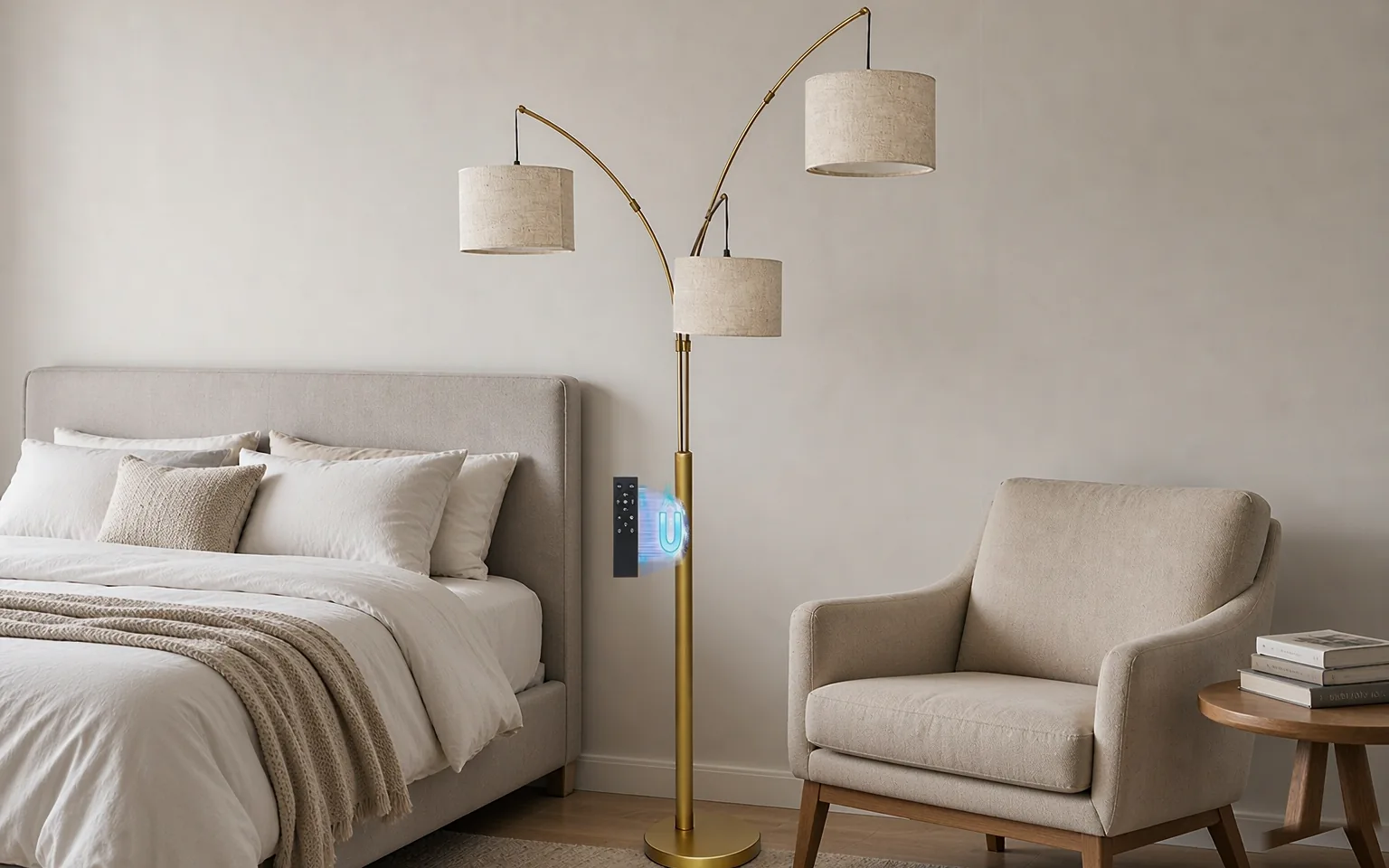
Somewhere on every portable lamp is a small marking stating a maximum wattage. It is easy to ignore, and it is one of the few numbers on a luminaire that carries a safety meaning. Understanding what it limits — and what it does not — solves a surprising number of downstream problems in retail and hospitality programmes.
The number is a thermal limit
The maximum wattage marking exists because a lamp is a closed or semi-closed space around a heat source. Too much heat and the shade discolours, the socket degrades, the wiring insulation ages faster, or in the worst case something ignites.
So the marking is not advice about brightness. It is the boundary of what the construction was evaluated to handle. Exceeding it is not a performance upgrade; it is an untested configuration.
This is why the marking belongs on the lamp rather than only in the instructions: the person replacing a bulb years later may never see the manual.
Where to find it, and what it looks like
If you cannot find it on a sample, ask. A lamp with no accessible maximum wattage marking is a question worth resolving before an order, not after a customer writes a review.
- On a label at or near the socket, often on the socket shell itself.
- On a label on the base or underside where the socket is enclosed.
- Occasionally on a tag attached to the cord near the plug.
- Sometimes repeated on the carton or the instruction sheet.
LED changed the question, not the rule
Most lamps now ship with or are used with LED bulbs, which draw a fraction of the power of the incandescent lamp the marking was written around. That makes the limit easy to stay under — but it does not make it irrelevant.
The confusion is usually the other way round: a buyer sees 'equivalent to' on a bulb package, assumes the equivalence is what the socket cares about, and specifies the wrong thing. The socket cares about actual power draw and heat, not the equivalence claim. Wattage Equivalents Are Marketing, Not Physics untangles that.
The practical rule: check the actual wattage of the bulb being specified against the marking, and treat the equivalence number as a brightness hint for the customer.
What retailers and inspectors ask for
A retailer's compliance review usually wants to see that the marking is present, legible and consistent with the specification sheet and the listing. An inspector or a marketplace reviewer may ask the same thing for the same reason.
Inconsistency is the failure mode that costs money: a specification sheet that says one maximum and a product label that says another, or a listing that recommends a bulb above the marked limit.
UL 153: What the Standard Actually Covers sets out where this sits in the wider safety picture, and How to Verify a Safety Listing Instead of Trusting the Mark covers how to check the documentation behind it.
Hospitality has a second problem: whoever replaces the bulb
In a hotel, the person who replaces a bulb is not the person who specified the lamp. They will use whatever is in the store cupboard, and that is how a lamp ends up with a bulb above its rating.
The mitigations are operational: specify the replacement bulb in the maintenance manual, keep that bulb in stock, and if possible specify a lamp whose socket and marking make the correct choice the easy one.
Choosing the Included LED That Your Lamps Ship With is the upstream version of the same decision, and Hotel Floor Lamps: Designing for Ten Thousand Switches covers the durability side of a lamp that gets used hard.
Three-way and multi-socket lamps
A three-way lamp has a marking that reflects its highest configuration, and a multi-light floor lamp has to be read as a whole: three sockets each with a limit is not the same as a single limit for the fixture.
This is where specification sheets get quietly wrong, particularly when a lamp is re-lamped with brighter bulbs than it shipped with. Three-Way Bulbs and Lamp Switches, Decoded explains the switching logic.
When in doubt, ask the supplier to confirm in writing the maximum per socket and the maximum for the fixture.
Where Anrotix fits
The Anrotix portable-luminaire range is ETL listed to UL 153 and CSA C22.2; certificate copies and confirmation of which models the listing covers are provided on request. Model-specific bulb and socket information is supplied with the specification sheet rather than inferred from the range.
Nine 120V floor and table lamp models are held in the United States, orderable from ten units with mixed SKUs, dispatched within one business day and typically delivered in three to seven business days. Wholesale pricing is quoted by tier rather than published — send the model list and quantity with an enquiry.
For the bulb specification and socket marking on a specific model, email help@anrotix.cn with the model name and how the lamp will be used.
Related reading
- UL 153: What the Standard Actually Covers
- The Bulb in the Box: Choosing the Included LED That Your Lamps Ship With
- Wattage Equivalents Are Marketing, Not Physics
Frequently asked questions
Does the maximum wattage apply to LED bulbs?
Yes. It is a thermal limit on the construction, not an incandescent-only rule. Check the actual wattage of the LED against the marking, not the equivalence figure on the bulb package.
Where should the marking be?
Usually on or near the socket, or on a label at the base. If it is not findable on a sample, ask the supplier before ordering.
How do you stop a hotel replacing bulbs with the wrong ones?
Specify the replacement bulb in the maintenance documentation and keep it in stock. The person replacing the bulb will use what is on the shelf.
Sourcing lamps for your business?
We stock the Anrotix range in the United States — complete with LED bulbs and accessories — and supply from 10 units, mixed across SKUs.
Request wholesale pricingRelated product: 76-inch torchiere with a folding head — a tall model where bulb choice and socket marking both matter
Recruiting regional partners worldwide — help@anrotix.cn