Last reviewed: Sep 15, 2026
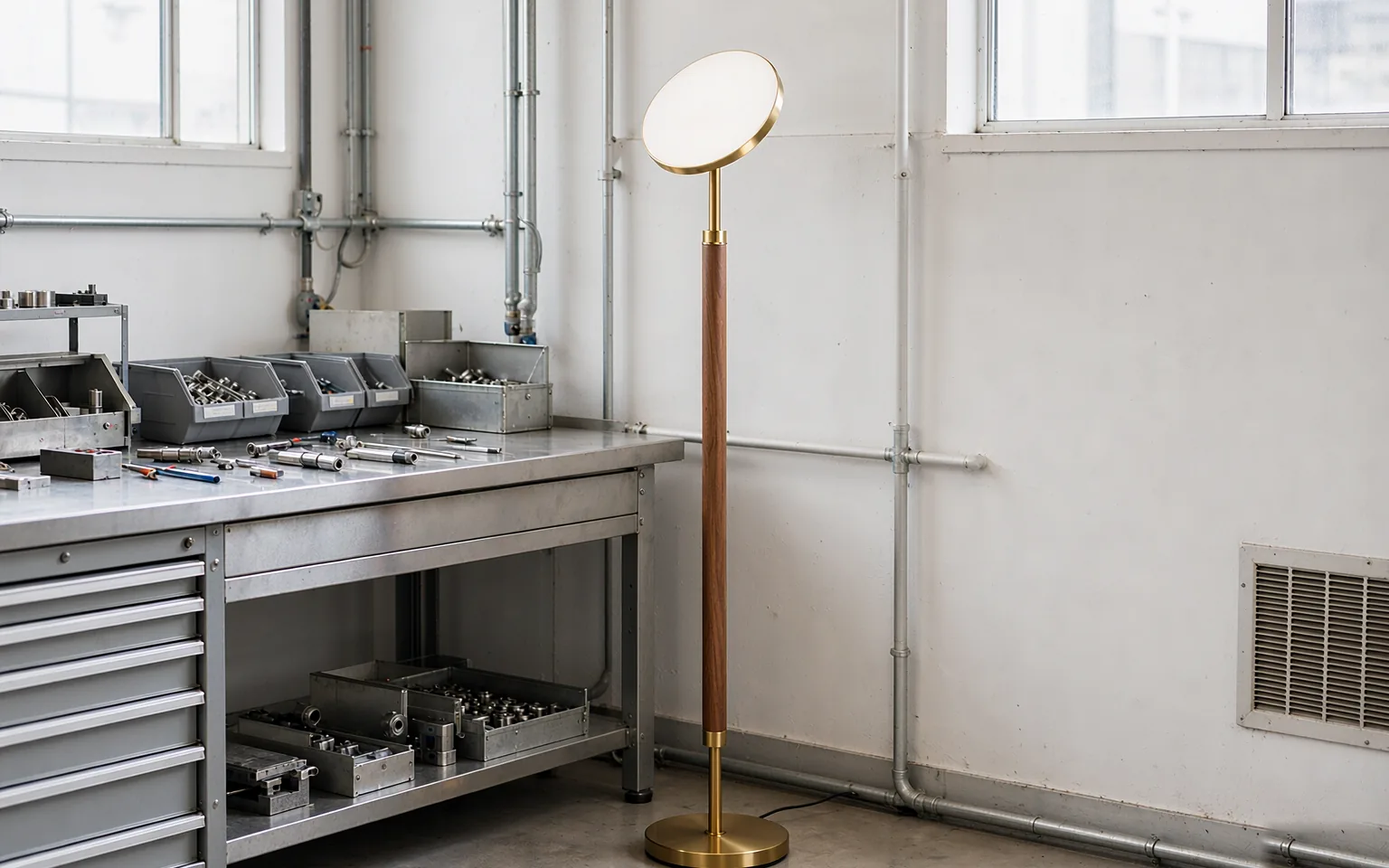
Ask a supplier whether a lamp is 'certified' and you will get a yes. The useful question is which standard the listing is evaluated against, because the standards for portable luminaires and for fixed luminaires are different documents with different tests, and the distinction follows the installation — not the price point or the look. Buyers who understand the split write better specifications, pass plan reviews without surprises, and avoid the awkward moment when an electrician or inspector questions a fixture on site. For the full scope of the portable-lamp standard itself, see our guide to UL 153 and what it covers.
The line between portable and fixed
A portable luminaire is one intended to be moved and connected by a cord and plug — table lamps, floor lamps, desk lamps. A fixed luminaire is one intended to be permanently connected to a branch circuit, typically hardwired to a junction box — recessed downlights, wall sconces, chandeliers. The same factory can produce both, but the evaluation each product needs is different, and the marking on the label states which standard the listing was granted under.
- Cord-and-plug connected, movable by the user → portable lamp territory (UL 153)
- Hardwired to a box, intended to stay put → fixed luminaire territory (UL 1598 and related standards)
- Some specialty products sit under their own standards — low-voltage systems, for example, have dedicated documents
- The listing mark on the product names the applicable standard; ask for it before assuming
Why the distinction bites in real projects
The confusion usually appears in hospitality and multifamily work. A designer specifies a 'decorative wall fixture' that is actually a portable sconce designed to hang on a cord; the electrician expects a hardwired unit; the plan reviewer sees a portable appliance specified into a fixed position. None of the products is unsafe — each is just being asked to play the other role. The fix costs nothing at specification time: classify each item by how it will be powered and mounted, and require the listing to match.
Specify by installation, not by appearance. A lamp's listing follows its cord and plug, and no amount of styling changes which standard applies.
Reading the label and the paperwork
The manufacturer's label on a listed luminaire is required to identify the product, and the listing documentation behind it identifies the standard the evaluation was granted under — the right to issue that mark belongs to labs recognised under OSHA's Nationally Recognized Testing Laboratory programme. Buyers should treat the two as a pair: photograph the label on the sample, file it with the listing paperwork, and make the pair part of the specification record for the project. When a plan reviewer or an electrician asks what a product is listed to, the answer arrives from the file in seconds rather than from a supplier's memory in days.
For an imported range the chain of paperwork matters as much as any single document. The importer of record holds the obligation that the products offered for sale match what was evaluated, so the practical question — which models does the listing cover, and can you prove it — belongs in the buying conversation before the order, not in the inspection after it. Suppliers with current, well-organised documentation volunteer it; treat hesitation on this question as a data point about everything else.
What to ask a supplier, in order
First, which standard the range's listing is evaluated against — for a portable floor and table lamp range the expected answer is ETL listed to UL 153, and certificate copies plus confirmation of which models the listing covers should be available on request. Second, whether any model in the range is a fixed-installation product, and if so what its listing covers. Third, for models with remote controls, the FCC authorisation status of the transmitter, which is a separate obligation from the lamp's safety listing. Suppliers who answer all three in writing are the ones whose paperwork survives contact with a plan review.
This article is a buying guide, not legal advice; the authority having jurisdiction in your locality makes the final call on any installed product.
Frequently asked questions
Can a portable lamp be hardwired in a hotel project?
Not on the strength of a UL 153 listing. If the installation is fixed, the specification should call for a product listed for fixed installation. Many projects instead use portable lamps as intended — plugged into receptacles — which is both compliant and cheaper to install.
Does the ETL mark itself tell me which standard applies?
The listing references the standard evaluated. Ask the supplier for the listing scope in writing; the mark shows the product was evaluated by an NRTL, and the certificate states the standard and the covered models.
Are LED retrofit bulbs inside a portable lamp a fixed-luminaire issue?
No. A screw-in LED lamp in an E26 socket is a user-replaceable lamp, and the portable luminaire listing covers the fixture with its intended lamp type. Integrated LED designs are evaluated as part of the luminaire itself.
Sourcing lamps for your business?
We stock the Anrotix range in the United States — complete with LED bulbs and accessories — and supply from 10 units, mixed across SKUs.
Request wholesale pricingRelated product: Knob-Dimmable 3-Light Arc Floor Lamp — a portable lamp whose dimming knob belongs in the UL 153 evaluation, alongside the range's listing paperwork
Recruiting regional partners worldwide — help@anrotix.cn