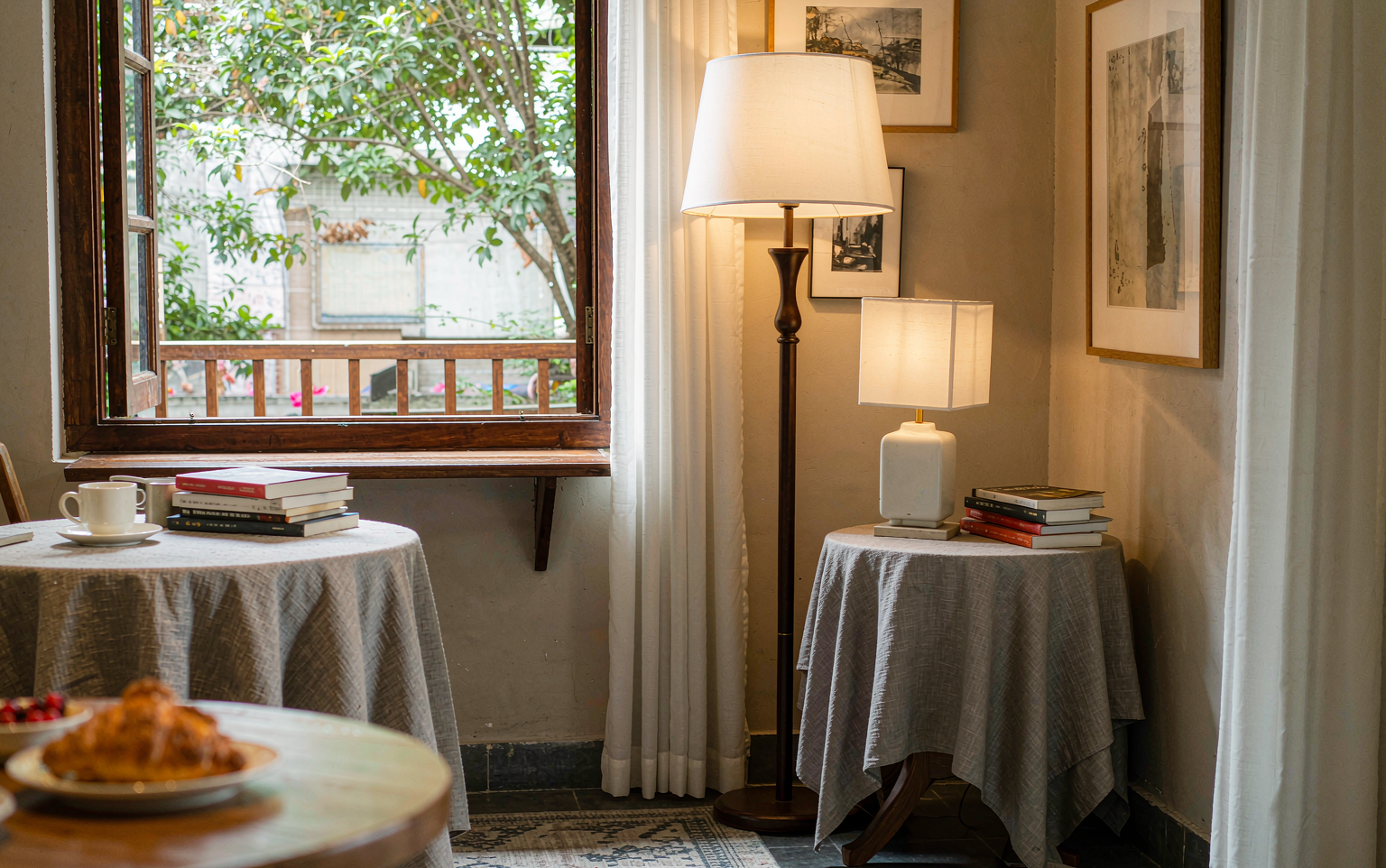
Trade shows are expensive, tiring and still the fastest way to judge a lighting supplier. Everything you learn in the first ten seconds of handling a lamp — weight, finish, how the switch feels — is unavailable in a PDF.
Decide what you are there for
Buyers who arrive with a written brief leave with options. Buyers who arrive curious leave with catalogues. A brief should name the price band, the height range, the finish and the certification requirement, so that conversations can be ended or extended quickly.
Handle everything, in this order
Four checks take seconds and filter most of the floor:
- Lift the base. Weight tells you about stability and about material honesty.
- Operate the switch and the joints. Cheap mechanisms feel cheap immediately.
- Look at the shade seam and the paint edge under the rim.
- Ask who the lamp was designed for and who the counterparty on the listing is.
Ask the questions catalogues avoid
Minimum order quantity by model and mixed across models, lead time for a repeat order, whether the factory runs its own plating, spare part availability for three years, and what happens on a damage claim. Answers reveal whether you are talking to a manufacturer or a trading desk.
Leave with commitments, not brochures
A useful result from a show is a sample list with prices, dates and named contacts, plus two or three factories you intend to visit or audit. Photograph the labels on the products you liked; a month later you will not remember which model it was.
Follow up within a week
Sample requests sent from the floor get priority. The same request sent three weeks later is one of hundreds. Send it before the show ends, referencing the booth and the model, and ask for a shipping date rather than a quotation.
Sourcing lamps for your business?
We stock the Anrotix range in the United States — complete with LED bulbs and accessories — and supply from 10 units, mixed across SKUs.
Request wholesale pricingRecruiting regional partners worldwide — help@anrotix.cn