Last reviewed: Sep 15, 2026
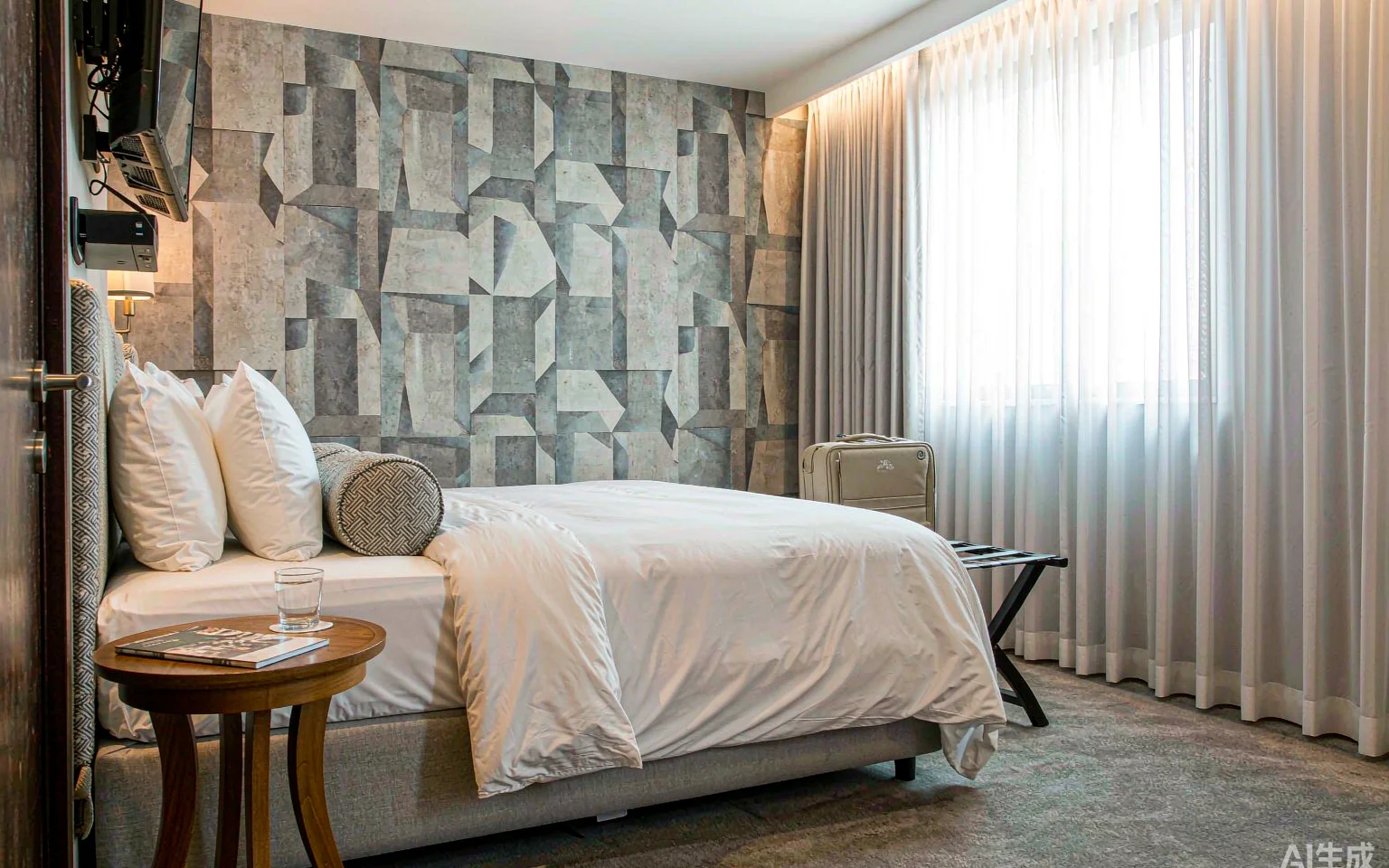
Portable lamps rarely appear at the top of a hospitality budget, which is exactly why they cause disproportionate trouble. They get specified late, ordered late, and then shortened because someone discovered the room count changed. This guide sets out how the floor and table lamp buy actually works inside a hotel project: who specifies it, where it sits in the FF&E package, what information a supplier needs before quoting, and how to stop a small line item from becoming the thing everybody remembers two weeks after opening. It is written for the people doing the buying — purchasing agents, FF&E coordinators, interior designers specifying to a brand standard, and asset managers planning a refresh.
Why the smallest line item creates the biggest delay
In a hotel FF&E budget, portable lamps sit near the bottom on cost and near the top on risk. Case goods and soft goods are bought early because they take months to make and because their lead time is understood. Lamps are usually selected after the room design is frozen, which puts them late in the sequence and leaves very little slack in the calendar. Anything that sets them back — a finish sample nobody signed off, unanswered question about the switch type, a freight consolidation that waits on another vendor — lands directly on the installation date rather than being absorbed earlier in the programme.
The second problem is ownership. Nobody holds the lamp category end to end. The designer picks the look, procurement negotiates the number, engineering installs what arrives, and housekeeping lives with it for the next decade. Each party optimises something different, and the requirements that matter most to the last group in the chain — whether the shade can be replaced, whether the switch survives a cleaning regimen, whether the replacement is still available in year three — are the ones nobody is formally accountable for at the point of purchase.
The four roles that touch a lamp order
Understanding who is in the conversation explains why the same question gets asked four different ways. Each of these people will read your specification looking for something different:
- The interior designer or brand standards team — decides height, shade shape, finish and overall silhouette, usually working from drawings and a mood board rather than from a catalogue
- The FF&E purchasing agent or procurement manager — converts design intent into a purchasable specification, manages the budget line, and enforces the documentation the owner or lender requires
- The owner or asset manager — owns installed cost and cares about what happens at the next refresh cycle, not just at opening
- Engineering and facilities — inherits the product, replaces it at two in the morning, and discovers whether spare parts exist
Ask early whether portable lamps are being purchased as loose FF&E or consolidated into a case goods package. It changes who pays the freight, who installs the item, and who is accountable when the count comes up short.
Where portable lamps sit in the FF&E package
FF&E — furniture, fixtures and equipment — is an accounting category as much as a physical one, and it decides how the lamp is bought, freighted and depreciated. Portable lamps are typically loose FF&E: they are ordered against their own specification, shipped separately from the case goods, and installed by a different crew on a different day. That separation is convenient for accounting and inconvenient for scheduling, because it means nobody automatically synchronises the lamp arriving with the room being ready.
There is also a quantity problem specific to hospitality. The lamp count moves with the room count, room type mix and any late change to amenity spaces. A decision made six weeks into construction to convert four rooms into accessible units, or to add a reading nook to the lobby, changes the lamp order and almost nothing else. Suppliers usually hear about it after the purchase order is placed.
The three specifications that actually decide the product
The photometric side is covered in our note on guest room light levels, and the mechanical side in the piece on lamp durability in hotel rooms. Both are worth settling before you request a quote, because both change what you are asking suppliers to price.
- Listing and voltage — what the lamp is listed to and what it plugs into. For the US and Canadian market that means a portable luminaire listed to UL 153 (and CSA C22.2 for Canada), built for 120V with a US plug. Anything requiring hardwiring belongs in the electrical package, not in a portable lamp order.
- Durability under hospitality use — switch cycles, cord strain relief, finish resistance to cleaning agents, and tip resistance on carpeted floors. These are the failure modes that separate a lamp specified for a home from one specified for a property.
- Serviceability — whether a shade, switch, harp or bulb can be replaced without scrapping the fixture. This is the difference between a small repair and a full replacement three years after opening.
Lead time: where the calendar disappears
Lead time is rarely lost in production. It disappears in the gaps between steps — waiting for a sample to be signed off, waiting for a room count to freeze, waiting for a container to have enough in it to ship. The table below maps the sequence and the thing that usually causes each stage to slip. The durations are deliberately not stated as numbers, because they vary by programme; what does not vary is which step slips.
| Stage | Common cause of delay | What to settle before starting |
|---|---|---|
| Finish and shade approval | Physical sample round-trip with no sign-off date | Request samples early and agree a signing date |
| Specification freeze | Room counts still moving | Lock quantities before pricing, not after |
| Production or allocation | Made-to-order items mixed with stocked items | Ask which parts of the range are stocked in the United States |
| Freight and consolidation | Waiting on another vendor to fill the container | Decide up front whether lamps ship alone or with other FF&E |
| Delivery and installation | Lamps arrive before rooms are ready to receive them | Schedule against the install date, not the opening date |
What to ask a supplier before submitting the RFQ
Four questions asked early will save more time than anything else in this process. Is the model stocked domestically or built to order, and what does that do to lead time? What is the minimum quantity, and can it be mixed across models? What documentation ships with the order — listing evidence, country of origin, carton marking? And what happens if a part fails in year two: is there a replacement, or a replacement unit?
Wholesale pricing on this range is quoted by tier against your actual mix rather than published as a list, because what you pay depends on what you buy together and where it ships. If you would like a quote against a real specification, send the model list, quantities and ship-to region to help@anrotix.cn, or use the wholesale enquiry form — the answer comes back against the actual order rather than against a generic price sheet. The sample approval process note sets out how to run the sample step without losing three weeks to it.
Compliance note: Anrotix portable lamps are ETL listed to UL 153 for the United States and to CSA C22.2 for Canada. Certificate copies and confirmation of which models the listing covers are provided on request. No claim is made for CE, UKCA, EAC, RCM, INMETRO or SASO.
Frequently asked questions
Are portable lamps part of FF&E or OS&E?
Usually FF&E — they are fixed enough to be capitalised and to depreciate with the building, unlike operating supplies. The classification matters because it decides who signs off, who pays freight and how the asset is tracked after opening. Confirm it with your accountant rather than assuming, since some operators treat low-cost portable items differently from case goods.
When should lamps be specified in a hospitality project?
Earlier than they usually are. The point at which design intent is set is also the point at which stock availability should be checked, because it determines whether the model you have drawn can be delivered inside your calendar. Waiting until procurement begins turns a design decision into a lead-time problem.
Can a hospitality order mix floor lamps and table lamps?
Yes, and it usually should. Mixed-model orders let you cover several room types in one shipment and one consolidation, and they keep the paperwork and freight to a single transaction. Minimums are typically stated per order rather than per model, so mixing across the range is normally possible.
Sourcing lamps for your business?
We stock the Anrotix range in the United States — complete with LED bulbs and accessories — and supply from 10 units, mixed across SKUs.
Request wholesale pricingRelated product: 76-Inch Torchiere Floor Lamp with a Folding Head — a tall model that folds flat for freight and suits guest rooms where floor space is tight
Recruiting regional partners worldwide — help@anrotix.cn