Last reviewed: Sep 15, 2026
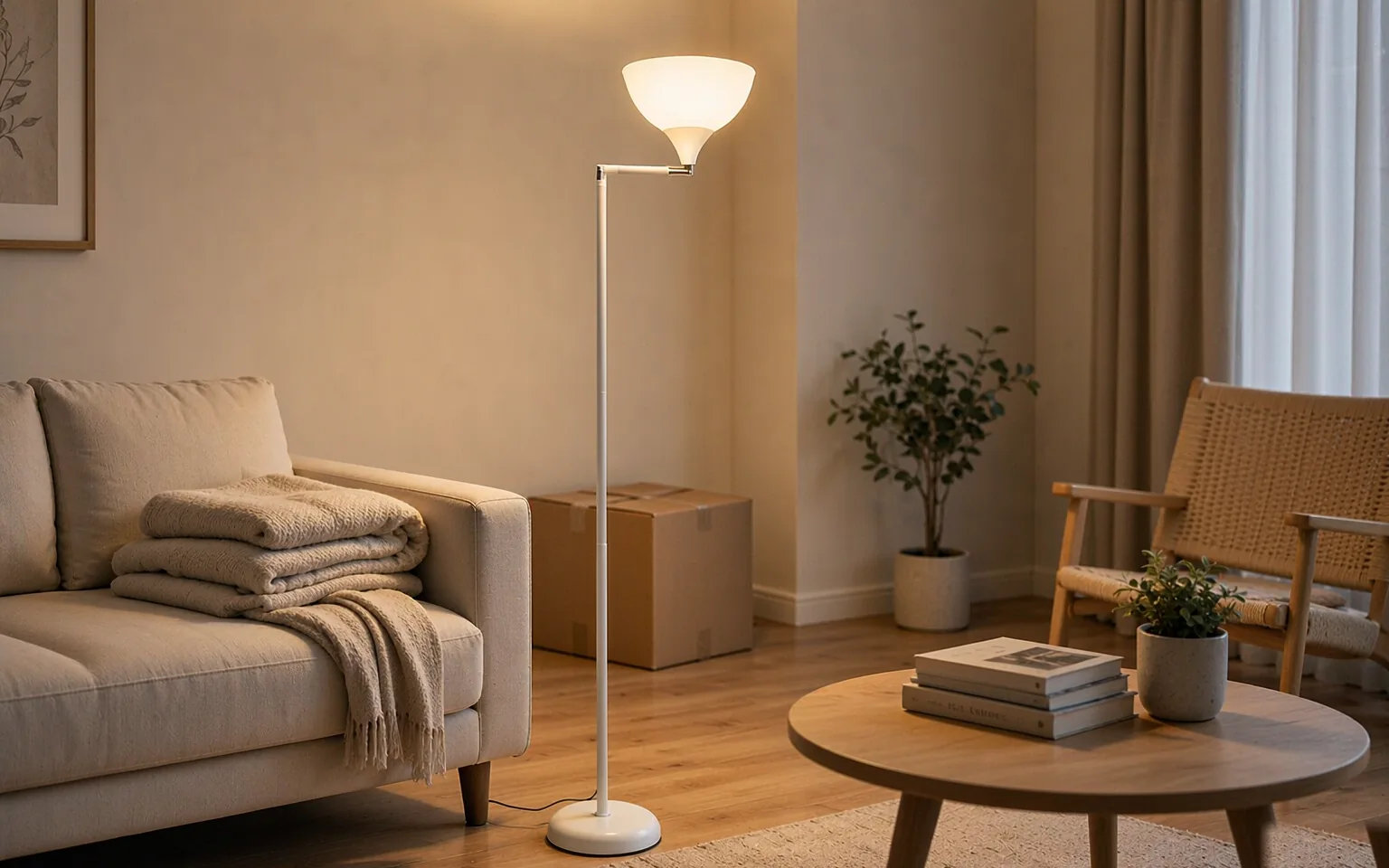
There is an irony every lamp retailer eventually confronts: the store's own lighting does more to sell a lamp than any spec sheet, and most showrooms get it wrong in the same few ways. Customers do not evaluate lumens or CRI — they stand in the pool of light and decide whether the room feels right. That decision is made largely by the bulb you chose for the display and the surfaces around it, which means the showroom itself is your best salesperson or your quietest saboteur. The shelf-layout fundamentals are covered in our planogram guide; this piece is about the light itself.
One bulb policy for every display
Every lamp on the floor should be lit by the bulb it ships with, at the specification it ships with — same colour temperature, same output, same dimming behaviour. The most common showroom failure is a display lamp running whatever bulb was in the drawer: a 5000K shop bulb in a lamp sold with a 2700K warm LED, so the customer takes home a pool of light visibly different from the one they decided inside. Write the bulb specification on the display ticket, and audit the floor monthly.
- Display bulbs match the shipped specification exactly, documented on the ticket
- A consistent colour temperature across adjacent displays — mixed temperatures read as product defects
- Spare bulbs stored by specification, not by wattage
- A monthly walk-through with the lights on, checking for drifted or dead display bulbs
Control the ambient light around the hero
A lamp display competes with the showroom's own ceiling lighting. Overhead flood on full means the lamp's contribution is invisible — a torchiere's uplight effect, an arc lamp's shade glow, all washed out. Dim the general lighting in the display zone during selling hours so each lamp's own light does real work. The contrast is the demonstration: a customer who sees a corner genuinely transformed by one lamp has been sold without a word.
You are not displaying furniture that happens to glow. You are selling the light, and the light is only visible when the room lets it be.
Train the floor to switch the lamp on
The single highest-return habit in a lamp showroom costs nothing: every customer who pauses near a lamp gets it switched on, by the staff, as the first move. An unlit lamp is a piece of furniture with opinions withheld; the light is the demonstration, and a customer who has stood in the light rarely goes back to evaluating the object. Script it into the floor routine — lamp on, then conversation — and the showroom's conversion argument stops depending on whichever employee remembers that lighting is the product.
The same routine is the best product-training mechanism available. Staff who switch lamps on all day learn which models throw a pleasing pool, which run hot near the shade, which dim smoothly and which step, and their recommendations start reflecting the floor's honest evidence instead of the brochure. That learned floor voice shows up in the numbers: it is the difference between a customer told 'this one is popular' and one told 'watch what it does to the corner'.
Stage the lamp in a room, not on a shelf
Lamps shown on bare shelving read as appliances; lamps shown beside a chair, a side table and a rug read as rooms. The staging need not be large — a corner vignette per price tier, each lit by one of your own lamps, does more for floor lamp sales than any additional facing. Where space is tight, rotate the vignette seasonally and photograph it for the website and social feeds; the same staging then works twice, in-store and online.
Photograph displays with the lamp's own light doing the work, at dusk-equivalent exposure — the resulting images match what the customer will actually live with.
Audit the floor the way a customer walks it
Once a season, walk your own entrance with the honesty of a first-time visitor and note where the light directs you. Showrooms accumulate: a display added here, a riser moved there, a ceiling circuit that was dimmed for an event in March and never restored. The accumulation bends the floor's lighting without anyone deciding anything, and the lamps — the products most sensitive to surrounding light — are where the drift shows first. The audit takes twenty minutes and usually ends with one breaker, one dimmer setting and one display moved.
Bring the checklist from the sample round into the audit: display bulbs still matching the shipped specification, shades clean and seams turned back, switches cycled, tickets legible. The showroom is the one place where your entire assortment is switched on at once, which makes it also the one place where a range-level inconsistency — one model shipping visibly warmer than its neighbours — can be caught before a customer's living room catches it instead.
Frequently asked questions
What colour temperature should showroom general lighting use?
Pick one temperature for the ambient lighting — most lamp retailers settle on a warm setting consistent with the residential products they sell — and keep every display bulb within it. Mixed ambient temperatures make even correct display bulbs look inconsistent.
Should display lamps be plugged into switched or dimmed outlets?
Switched is the baseline; dimmed is better where the lamp supports it, because demonstrating the dimming range sells dimmable models more effectively than describing it.
How do I light lamps in window displays during the day?
Accept that daylight wins and design the window for silhouette and form — then switch the emphasis to the lamp's own light for evening hours, when the window works hardest.
Sourcing lamps for your business?
We stock the Anrotix range in the United States — complete with LED bulbs and accessories — and supply from 10 units, mixed across SKUs.
Request wholesale pricingRelated product: Wood LED Floor Lamp with Integrated Light Source — an integrated-LED model where the display bulb policy is set by the product itself — stage it as it ships
Recruiting regional partners worldwide — help@anrotix.cn