Last reviewed: Sep 15, 2026
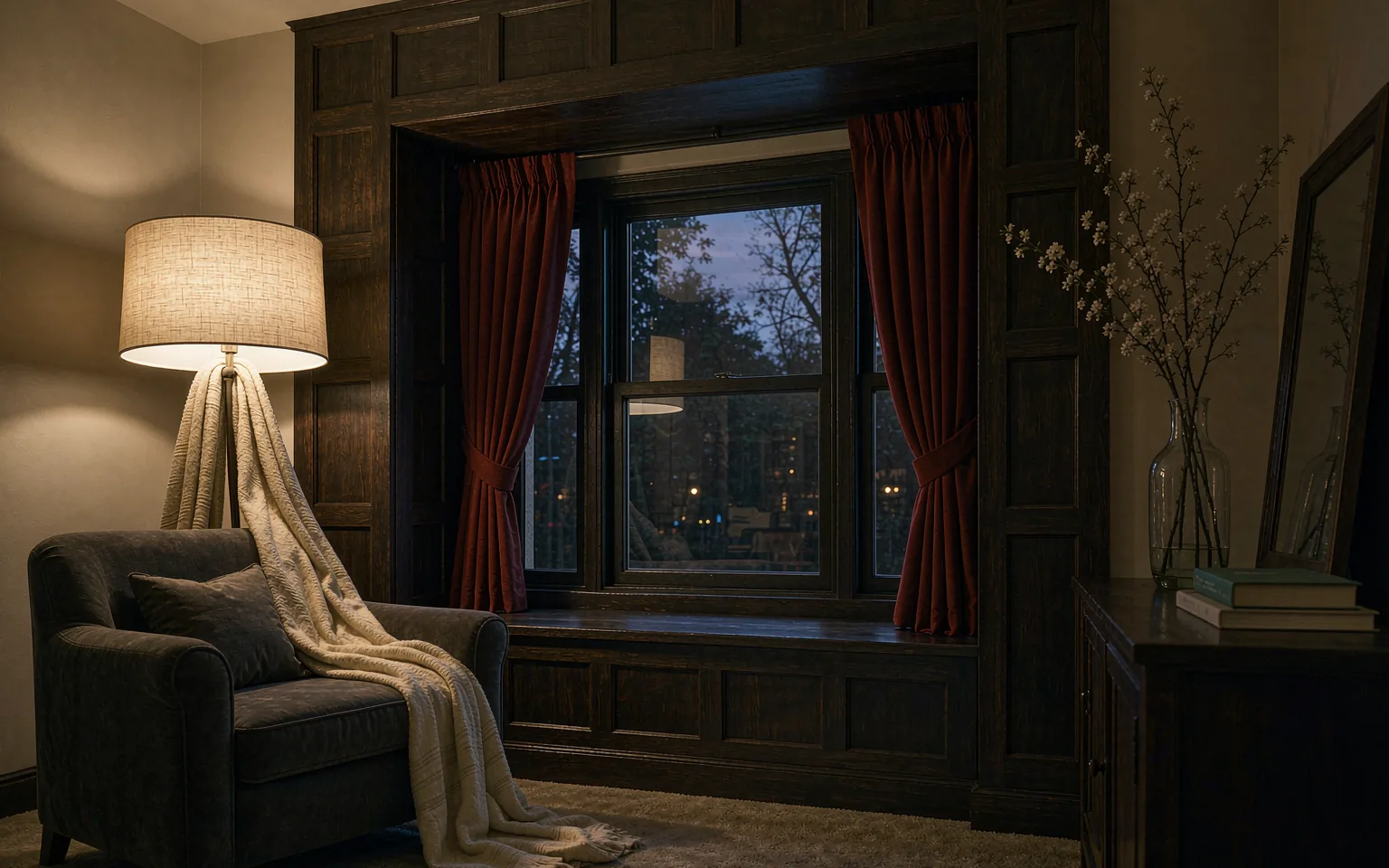
A shade fitter is the fitting that holds a shade on a lamp. It is small, it is rarely mentioned in product descriptions, and it decides whether the shade you order in year three fits the lamp you bought in year one. For a buyer running a programme — a retailer replenishing a shelf, a hotel replacing damaged shades, a distributor writing a specification — the fitter is one of the handful of fields that should never be left blank, because a mismatch is not adjustable. The shade either fits or it does not, and the return is on you.
The four fitter types you will meet
The critical distinction is between the fitter and the harp. A harp belongs to the lamp: it is a fixed part of the socket assembly, and its height sets where the shade sits. A spider or uno fitter belongs to the shade. Confusing the two is why a replacement shade arrives and sits two inches too high or fails to seat at all.
- Spider — a wire frame with a central ring that sits down over the socket and is held by a finial on top. Common on table lamps and on many floor lamps with a harp.
- Uno — a ringed fitting that screws onto the socket itself, so the shade is held at the socket rather than above it. Often used where the shade sits low and close to the base.
- Clip-on — a wire clip that grips the bulb directly. Common on small accent lamps and on shades sold as bulb clips.
- Harp and saddle — a U-shaped wire frame that rises from the socket base, with the shade held by a finial at the top. The harp is part of the lamp, not the shade.
Why the fitter belongs in the specification
Three practical reasons. First, replenishment: if the fitter is not recorded, whoever orders the replacement shade will guess, and a shade with the wrong fitter is unsellable in most channels. Second, damage rates: a fitter that holds the shade rigidly survives transit and handling better than one that allows movement, and in a lamp that is shipped with the shade fitted, that matters. Third, field service: a housekeeping or maintenance team replacing a shade needs to know what they are removing before they order.
For a specification document, two fields are enough: the fitter type and the shade dimensions. Together they make a replacement order unambiguous. The wider argument for including small mechanical fields in a lamp specification is made in Choosing Shades and Diffusers: A Purchasing Guide, which covers the shade decision end to end.
How the fitter affects the light
The fitter is not only mechanical. It sets the distance between the light source and the shade, and that distance decides how much light escapes above and below the shade and how visible the hot spot is. A shade held high on a harp throws more light down and shows more of the shade interior; the same shade seated lower on an uno fitter produces a tighter, more contained pool.
So changing the fitter changes the light as well as the fit. That is worth knowing during a value-engineering round, where a fitter substitution can look like a pure cost saving and turn out to change the appearance of every room in the project. The optical consequences of shade geometry are covered in Shades Decide the Light, Not the Bulb.
Compatibility with the socket and the lamp
Fitters are built around a socket size. A spider or uno fitter made for a standard E26 medium socket will not fit a smaller candelabra socket, and a clip-on fitter is sized to the bulb shape rather than the socket at all. If your programme spans both — a bedside lamp with a small socket and a floor lamp with a standard one — the shade references will not be interchangeable, and the specification should say so.
The base question is separate and equally worth stating. If you need a refresher on how bases are specified and why the two get confused, E26, E12, GU24: A Buyer's Guide to Lamp Bases covers it from the buyer's side.
Ordering spares the right way
That last point is the one with the longest tail. In a hotel or a multi-unit property, the person replacing a shade in three years was not involved in the original purchase, and the only thing standing between them and the wrong part is a line in a document. Holding spares is the other half of the answer, and the case for doing it deliberately is made in Spare Parts: The Cheapest Loyalty Programme in Lighting.
- Record the fitter type, the shade dimensions and the model reference together, in one line per model.
- Order spare shades with the lamps, not after the first failure — finishes and linings change between runs.
- For pairs, order spare shades in pairs, so a single damaged unit does not leave a mismatched set.
- Put the shade reference in the maintenance documentation, so a replacement three years later does not depend on memory.
If you are writing a shade specification and are unsure which fitter a model uses, send the model reference to help@anrotix.cn and ask for the fitter type and shade dimensions in writing before you place the replenishment order.
Frequently asked questions
What is the difference between a harp and a spider fitter?
The harp is part of the lamp: a wire frame that rises from the socket base and carries the shade. The spider is part of the shade: a wire frame with a central ring that drops over the top of the harp and is secured by a finial. A replacement shade needs to match the harp height and the fitter type, not just the diameter.
Can I use any shade with the same diameter?
No. Diameter is only one of three dimensions, and the fitter type is a separate requirement entirely. A shade with the correct diameter but the wrong fitter will not seat, and one with the correct fitter but the wrong height will sit too high or too low, which changes both the appearance and the light distribution.
Which fitter is most durable in a commercial setting?
It depends on how the lamp is used and how the shade is handled. A harp-and-spider arrangement is easy to service and is common in hospitality because shades can be swapped without tools. A low uno fitment keeps the shade close to the base and is harder to knock out of alignment. The more important point for a commercial programme is that spares are held in the same configuration, so a replacement matches what is already installed.
Sourcing lamps for your business?
We stock the Anrotix range in the United States — complete with LED bulbs and accessories — and supply from 10 units, mixed across SKUs.
Request wholesale pricingRelated product: a matched pair of table lamps — supplied as a pair with shades, 120V and E26, from ten units with mixed SKUs
Recruiting regional partners worldwide — help@anrotix.cn