Last reviewed: Sep 15, 2026
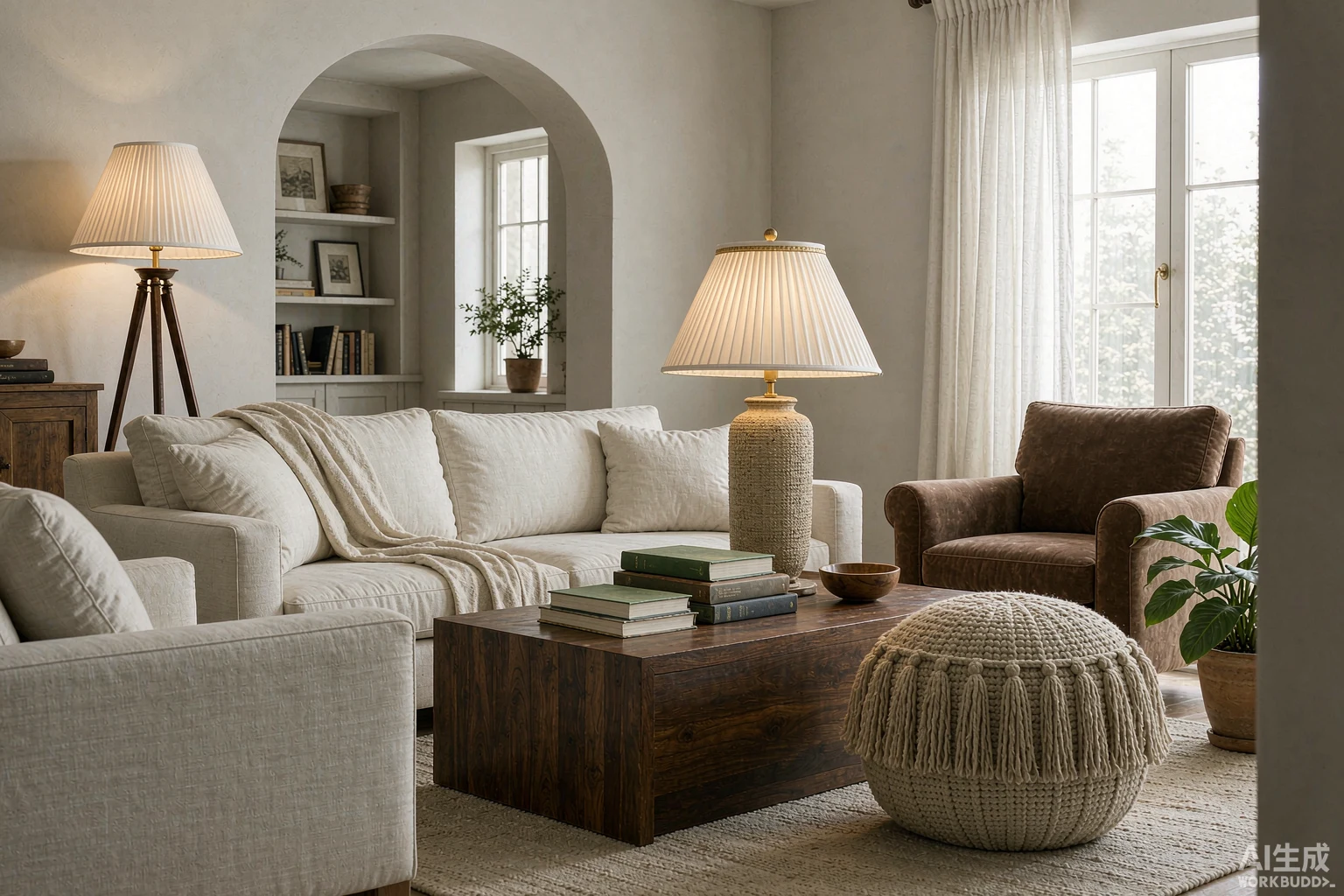
Catalogue photography flatters the single lamp: one sculptural floor lamp, one perfect room. Real rooms are layered — a floor lamp by the seating, table lamps on the side tables, sometimes a third source near the reading chair. For buyers this reality creates a specification question the single-hero fantasy never raises: which formats pair well together, and how do you standardise the pairing so a fifty-room programme does not become fifty individual design decisions? This article covers the pairing logic, the two or three combinations that cover most rooms, and how to buy the combination as a unit.
Why rooms want more than one lamp format
A single lamp, however handsome, produces a single pool of light — and rooms are used in more than one posture at a time. Someone reads in the corner while someone else crosses the room; a sofa conversation wants soft ambient fill while the side table wants task light for a cup and a phone. One tall uplight plus one or two table-lamp height sources distributes light at eye levels that match those uses, which is why interior designers almost never specify one format alone.
For programme buyers the practical consequence is that the unit of purchase is the room’s lamp set, not the lamp. Our guest room lamp packages article covers the hotel version of this logic; the residential and model-unit version is the same arithmetic with softer furniture.
Combination one: arc or torchiere plus table pair
The most common living-space pairing is an ambient uplight — an arc reaching over the seating or a torchiere washing the ceiling — plus a pair of table lamps on side surfaces. The uplight handles the room’s overall brightness and the evening mood; the table lamps handle the close-range tasks and give the seating group its composition. The pairing works because the two formats disagree usefully: one lights the room, the others furnish it.
When standardising this combination across units or model homes, hold two things constant — the finish family and the colour temperature of the included bulbs — and let the formats differ. Rooms read as designed when the materials agree and the shapes vary. Our choosing finishes guide covers the finish-standardisation side, and the shade selection guide covers why the shade, not the bulb, decides how the two formats feel side by side.
Combination two: console plus floor lamp in entries and offices
Narrower spaces — entries, reception corners, small sitting areas — pair a slim table lamp on a console with a compact floor lamp in the remaining corner. Here the pairing rule inverts: the formats should agree in visual weight, because a heavy multi-shade floor lamp next to a delicate console lamp looks like a mismatch rather than a composition. Match the visual bulk, vary the height.
This is also the combination where footprint discipline pays most. Our small apartment floor lamp guide shows how choosing by footprint keeps a two-lamp scheme from crowding a small room, and the same discipline keeps multi-unit lobbies and leasing offices from drifting into clutter as the programme grows.
Combination three: the single-format exception
Some rooms genuinely want one lamp: a compact bedroom where a good table lamp does everything, a desk-centric office, a corridor. Forcing a floor-and-table pairing into such rooms buys visual noise without functional gain. The programme-level answer is not to abandon standardisation but to define the room types first — full living spaces get the pairing, compact rooms get the single source — and to specify per room type rather than per room.
Our how many lamps per room planning article walks the room-type math, and the layered lighting guide covers the design theory underneath all three combinations.
Buying the pairing as one order
The pairing approach has one procurement trap: if the floor lamp and the table lamps come from different suppliers with different minimums, the buyer ends up purchasing rooms in the wrong proportions — table pairs arrive, floor lamps wait for the next container. A supplier who accepts mixed SKUs against one minimum dissolves the problem: the room’s set travels as one order, one freight plan, one finish standard.
Anrotix stocks nine models across floor and table formats for exactly this kind of combined buying. Our range is built to ETL listed to UL 153 and CSA C22.2, 120V with E26 bases and US plugs, held in United States stock, orderable from ten units mixed across models. Send your room types and counts to help@anrotix.cn and we will propose the pairings, quote the set, and ship it complete with bulbs.
Frequently asked questions
Should the floor lamp and table lamps in one room match in finish?
Match the finish family, not necessarily the exact finish. Rooms read as designed when the materials agree and the shapes vary — identical everything looks flat, while clashing materials look accidental.
How many lamps should a typical living space carry?
Usually two or three sources: one ambient format (arc or torchiere) plus one or two table-height sources for close-range tasks. Compact rooms — bedrooms, entries, desks — are the exception and often want a single good lamp.
What is the biggest procurement pitfall when buying lamp pairings?
Splitting the room’s set across suppliers with separate minimums, which forces purchases in the wrong proportions. A supplier who accepts mixed SKUs against one ten-unit minimum lets each room’s floor lamp and table lamps travel on a single order.
Sourcing lamps for your business?
We stock the Anrotix range in the United States — complete with LED bulbs and accessories — and supply from 10 units, mixed across SKUs.
Request wholesale pricingRelated product: compare the full Anrotix range side by side — heights, light output and controls for all nine models, for pairing across a room
Recruiting regional partners worldwide — help@anrotix.cn