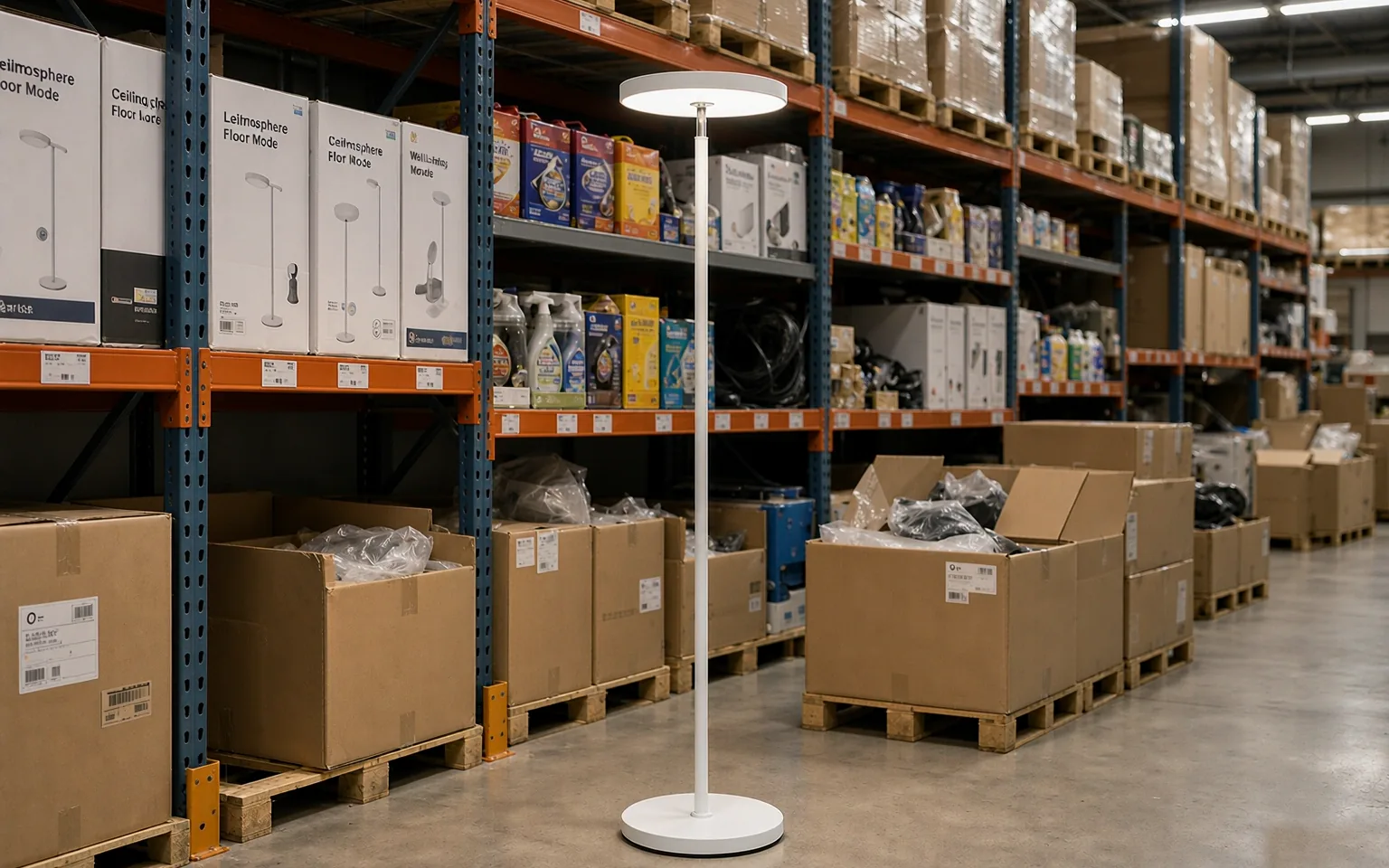
A furniture aisle sells on presence: a shopper who sees an empty slot buys elsewhere, and the lost sale is gone forever rather than merely delayed. Cart replenishment — the routine of keeping the shelf filled from back stock — is a rhythm a retailer sets on purpose, not a reorder triggered by an empty shelf. For lamps, the tall, fragile carton makes the rhythm matter more than for small goods.
The planogram is the plan
Replenishment starts with the planogram: how many facings of which model sit on the shelf, and what lives in the back room to refill them. Without a written plan, every restock is a guess, and the guesses drift toward the models someone likes rather than the ones sell through.
The planogram itself is a design problem. Our Building a Lamp Aisle That Sells guide covers the basics; replenishment is what keeps that plan alive week to week.
Reading sell-through before the gap
The trigger to refill should be the sales rate, not the empty slot. A model selling two a day needs a different refill cadence than one selling two a week, and the calendar should follow the data, not the last time someone noticed.
Our Reading Sell-Through guide shows how to reorder before the shelf goes empty — which is the entire point of a replenishment rhythm worth keeping.
Season shapes the calendar
Lamp demand has four peaks a year, and the back-room holding has to anticipate them rather than react. ordering into a peak after it starts is too late; the cart goes empty exactly when footfall is highest.
Our The Lighting Retail Calendar guide maps those peaks; replenishment is how you arrive at each one already stocked.
What Anrotix enables
We hold stock in the United States, so a replenishment top-up ships from domestic inventory in the quantity the shelf actually needs rather than a container minimum. Portable luminaires across the programme are ETL listed to UL 153 and CSA C22.2, 120V with E26 bases and US plugs, so a top-up reorders the same approved unit.
Wholesale pricing is tiered by volume and quoted rather than published — send the model list and target quantities to help@anrotix.cn and we will return landed options that fit a replenishment cadence.
Frequently asked questions
What is cart replenishment for lamps?
The routine of keeping the shelf filled from back stock on a set rhythm, triggered by sales rate rather than an empty slot. For lamps the tall, fragile carton makes the rhythm more important than for small goods.
Why trigger refill by sell-through rather than the empty shelf?
Because an empty slot is already a lost sale to a competitor. The refill cadence should follow the model's sales rate so the shelf is topped up before the gap appears.
How do seasons affect lamp replenishment?
Lamp demand has roughly four peaks a year. Back-room holding has to anticipate them; ordering into a peak after it starts means the cart goes empty exactly when footfall is highest.
Sourcing lamps for your business?
We stock the Anrotix range in the United States — complete with LED bulbs and accessories — and supply from 10 units, mixed across SKUs.
Request wholesale pricingRelated product: the models held in United States stock — 120V portable lamps with E26 bases and US plugs, orderable from ten units with mixed SKUs
Recruiting regional partners worldwide — help@anrotix.cn