Last reviewed: Sep 15, 2026
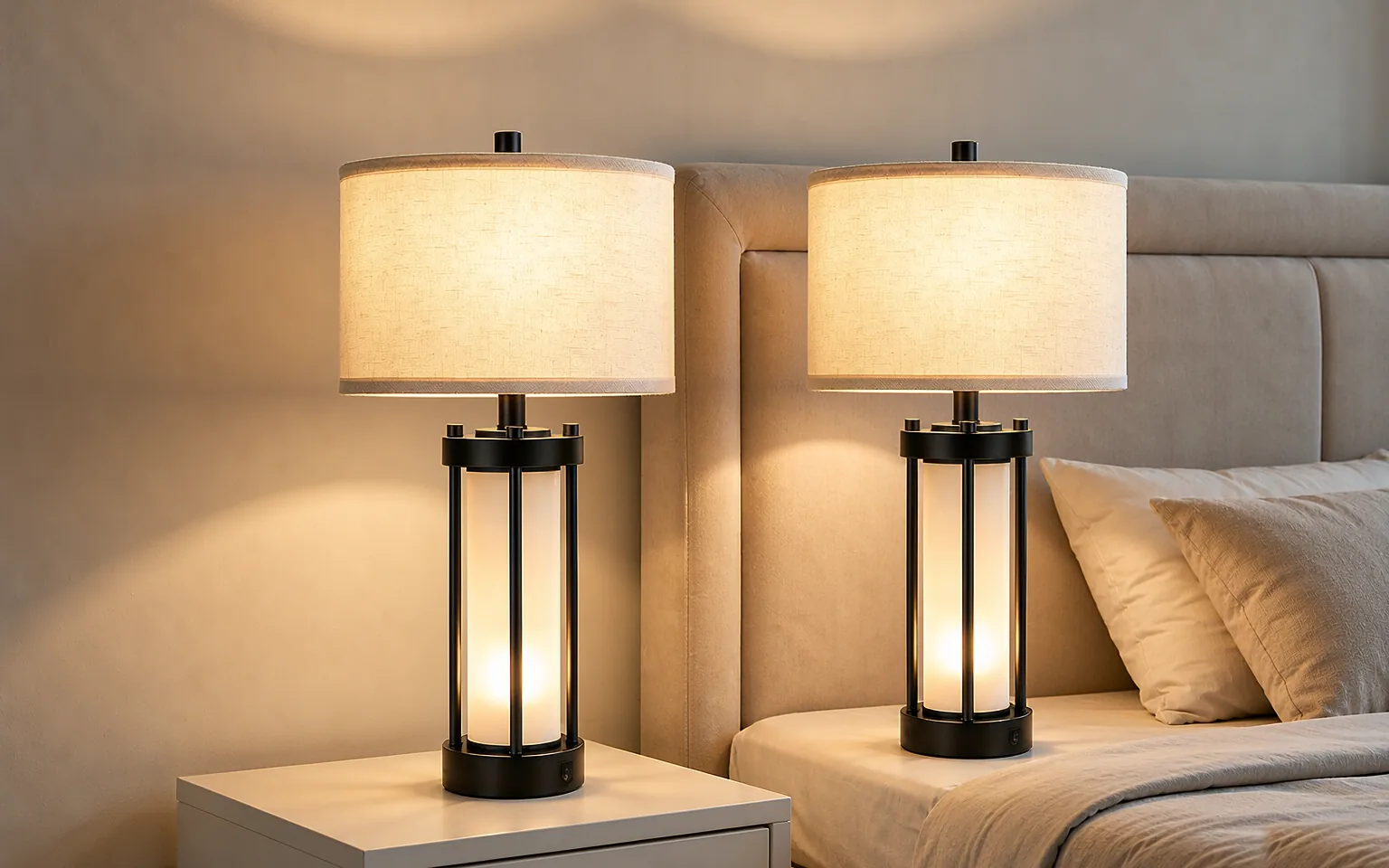
Lighting efficiency regulation in the United States is a patchwork: federal standards cover some products, state standards cover others, and portable luminaires frequently fall into a gap that is narrower than buyers assume.
Where the rules come from
Federal appliance standards set limits for certain lamp types, and a labelling programme identifies products that meet a higher efficiency level. Separately, states may adopt their own requirements for products sold within their borders, which is why a specification written for California often does not travel well to the rest of the country. The voluntary labelling tier that sits above the federal minimum is Energy Star.
What this means for a table or floor lamp
A cord-connected portable lamp is not itself an appliance standard in most cases, but the light source inside it may be subject to standards and to state-level rules on what can be sold. A lamp sold into California with a socket must either include a compliant light source or be designed so that only compliant sources can be fitted.
| Product | Likely obligation | Where it bites |
|---|---|---|
| Lamp with socket, no bulb | Label the maximum wattage; check state rules | California |
| Lamp with integrated LED | Driver and light source both specified | Everywhere |
| Lamp supplied with a bulb | The bulb must comply in the market of sale | State-specific |
| Decorative fixture | Fewer obligations, same safety listing | Training and enforcement |
Labeling is part of the requirement
Required markings, the maximum wattage, and any efficiency claim have to be accurate and legible on the product and, where specified, on the packaging. A claim printed on the carton is a claim the retailer inherits.
Why Arizona and Texas are not Arizona and Texas
Buyers frequently assume that a specification accepted in one US state will be accepted in another. For lighting, that assumption is usually safe outside the states with their own rules and unsafe inside them, which is a five-minute check worth doing before a container ships.
The practical approach
Design the lamp to the strictest market you intend to sell into, keep the light source and the socket as one documented decision, and record the compliance basis for each market in the product file. It costs nothing at the design stage and prevents a regional stock-out later.
Related reading
- Portable or Fixed? Which Safety Standard Applies to the Lamp
- DOE's Updated Test Procedure for Portable Luminaires
Frequently asked questions
Are there energy rules for portable lamps in the US
Federal and state rules can set efficiency expectations for lighting, and some apply at the product or fixture level. For portable lamps, the practical buyer concern is usually the lamp's efficacy and any state-specific requirement where it is sold.
Do energy rules change the safety listing
No. Efficiency rules are separate from the ETL or UL safety listing to UL 153. A compliant lamp meets both: the safety certification for the product and any applicable efficiency expectation for where it is sold.
How should I state efficiency to a buyer
Give accurate lumens and watts so the buyer can compute efficacy, and note any state-specific compliance plainly without overclaiming. Accurate specs let the designer or retailer confirm the fit themselves.
Sourcing lamps for your business?
We stock the Anrotix range in the United States — complete with LED bulbs and accessories — and supply from 10 units, mixed across SKUs.
Request wholesale pricingRelated product: Compare Anrotix floor and table lamps — lamp type and output listed for each model
Recruiting regional partners worldwide — help@anrotix.cn