Last reviewed: Sep 15, 2026
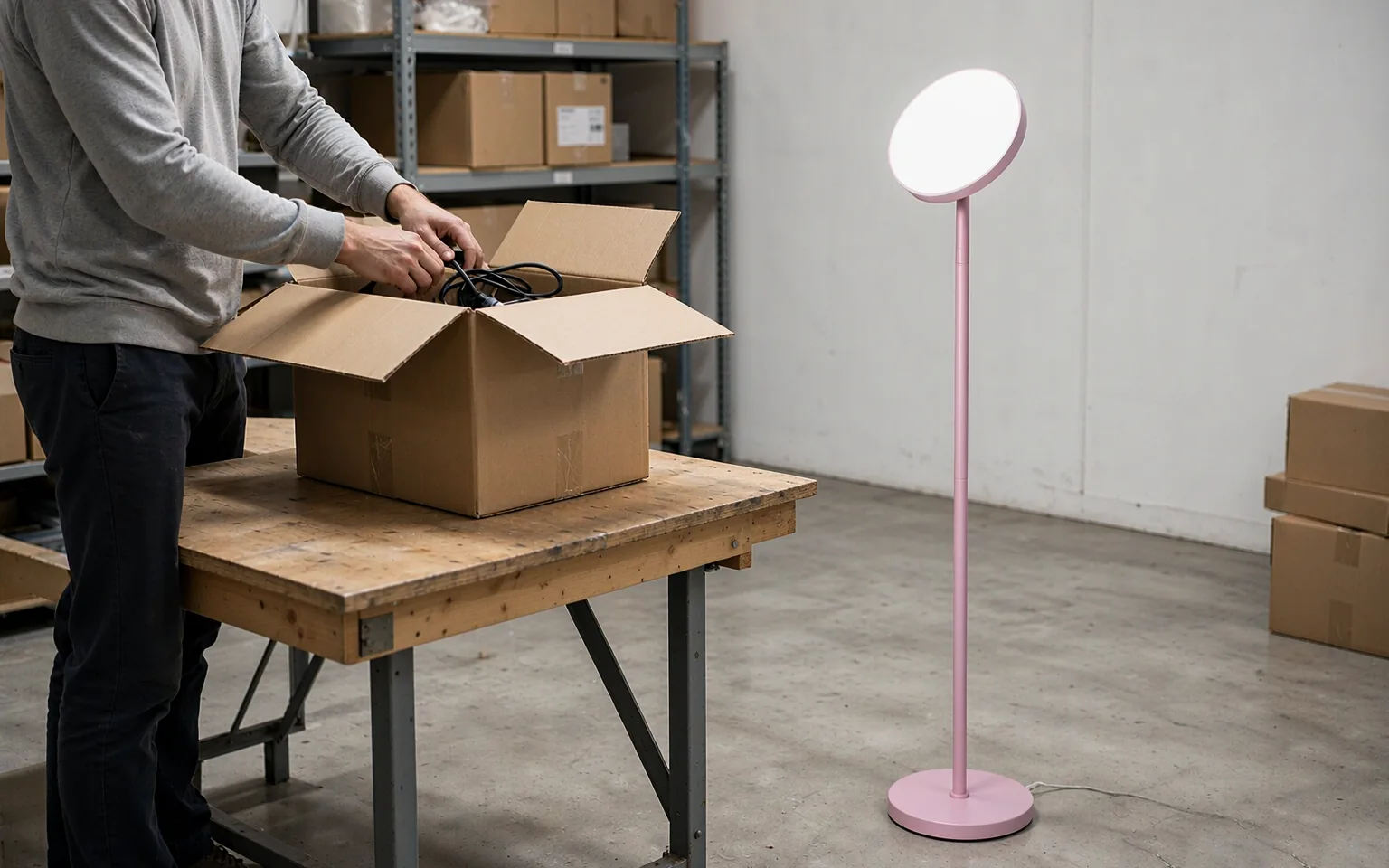
Retailers obsess over return rates and ignore return handling, which is where the money actually leaves. A lamp comes back in a carton that is now compromised, with a shade that may or may not be salvageable, and someone has to decide whether it goes back on the shelf or into the salvage stream. That decision costs labour, space and margin long before the refund cheque is written.
Why lamps are worse than average
A lamp returns as a large, fragile, partly-assembled object. Unlike a small good that drops back into a bin, a lamp needs inspection for shade damage, a check that all parts are present, and a repack that the original carton may no longer support. Each step is labour the sale never priced in.
The product-design angle is covered separately. Our Why Lamps Get Returned guide looks at what in the design triggers the return; this is about what happens after it lands back with you.
Reading the return data before it buries you
Return reasons are a specification signal, and most retailers let them fade. A cluster of 'arrived damaged' points at packing; a cluster of 'wrong colour' points at the listing; a cluster of 'too big' points at the description. Catching the pattern turns a cost centre into a fix.
Our Reading Your Own Return Data guide shows how to convert reasons into specification changes — the only move that lowers the handling load over time rather than just absorbing it.
Drop-ship changes the maths, not the problem
Drop-shipping moves the warehouse off your floor but not the decision off your desk. A drop-shipped return still has to be inspected, still has to be repacked or written off, and now the round trip is longer and the carton more travelled. The handling cost is deferred, not removed.
Our Drop-Ship or Stock? comparison lays out the economics; for returns specifically, drop-ship trades storage cost for a longer, costlier return path.
What Anrotix does to lower it
We hold stock in the United States and keep standard models in steady production, so a replacement or a corrected reorder ships from domestic stock rather than restarting a factory queue. Our portable luminaires are ETL listed to UL 153 and CSA C22.2 and use 120V with E26 bases and US plugs, which keeps a replacement electrically identical to the original.
Wholesale pricing is tiered by volume and quoted rather than published — send the model list and target quantities to help@anrotix.cn and we will return landed options that factor in the replacement path, not just the first sale.
Frequently asked questions
Why does a lamp return cost more than the refund?
Because the refund is the visible part. Inspection, repack and restock or write-off are labour and space costs the original sale never priced in, and a lamp is large and fragile enough that those steps are never trivial.
Does drop-shipping eliminate return handling?
No. It moves the warehouse off your floor but the return still has to be inspected and repacked or written off, now with a longer round trip. Drop-ship trades storage cost for a longer, costlier return path.
How do return reasons help lower the cost?
Clusters of reasons point at fixable causes — packing, listing or description. Converting those reasons into specification changes is the only move that reduces handling load over time instead of just absorbing it.
Sourcing lamps for your business?
We stock the Anrotix range in the United States — complete with LED bulbs and accessories — and supply from 10 units, mixed across SKUs.
Request wholesale pricingRelated product: the models held in United States stock — 120V portable lamps with E26 bases and US plugs, orderable from ten units with mixed SKUs
Recruiting regional partners worldwide — help@anrotix.cn