Last reviewed: Sep 15, 2026
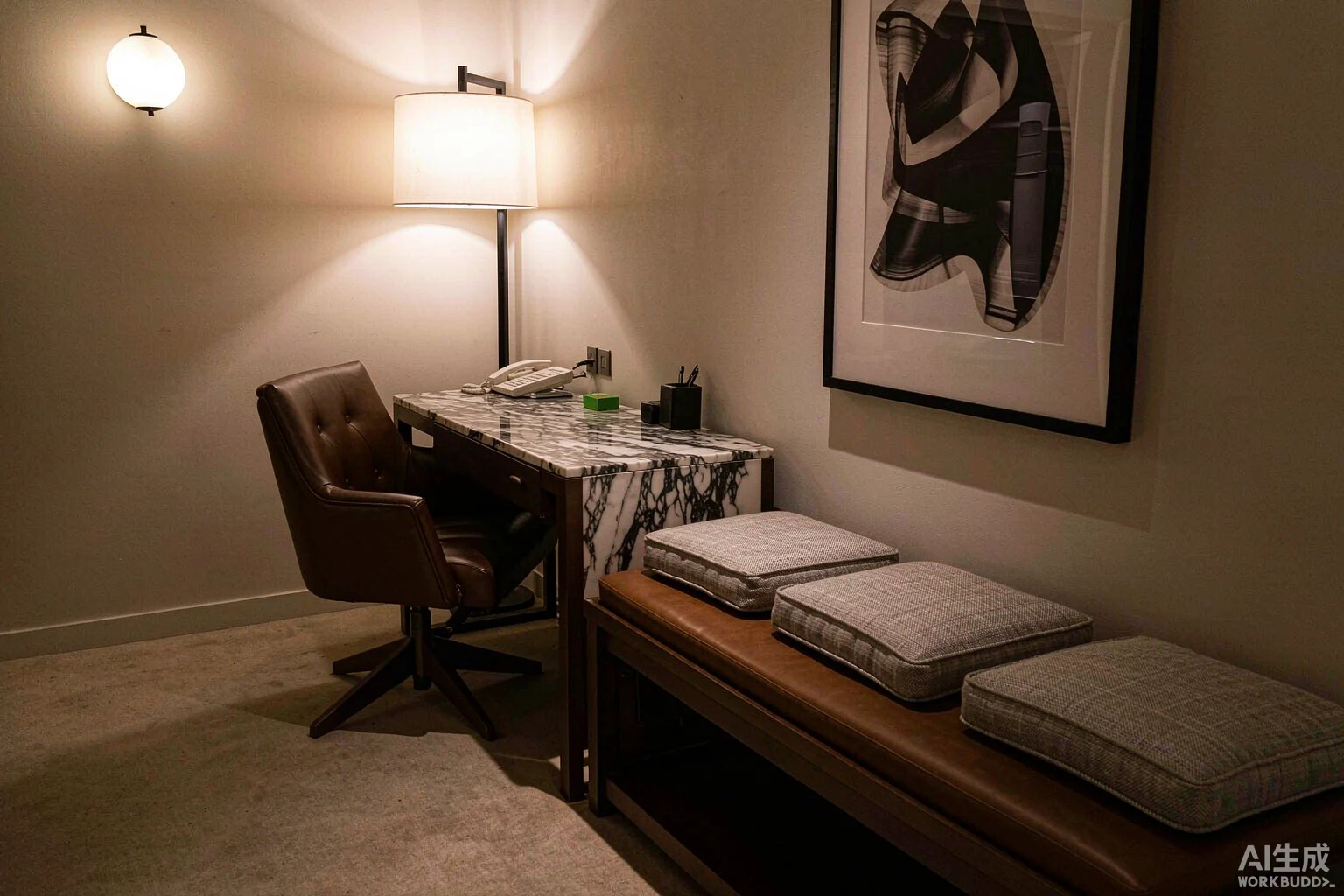
Hotels replace lamps constantly and almost never plan for it. The lamp fails on a Tuesday, the room is sold on Tuesday night, and the fix has to happen between checkout and check-in — a window of a few hours, in a room that has to look untouched afterwards. Engineering orders a replacement, procurement finds that the model is no longer stocked, and housekeeping is left explaining a slightly different lamp to a guest who has already noticed. The handshake between these three functions is the whole discipline. Our attrition planning article covers how many spares to hold; this one covers the swap itself.
The constraint is the room, not the lamp
In a new-build or a renovation, lamps are installed before anyone sleeps there. In an operating property, every replacement competes with occupancy. The room cannot go out of service for a lamp, the guest cannot be moved for a lamp, and the swap cannot leave evidence that it happened: no scuffs on the nightstand, no packaging in the corridor, no mismatched shade under a bedside light.
That constraint drives everything else. It sets the batch size, the time of day, the tools the crew carries and the way the replacement units are stored. A procurement team that plans replacements as a purchasing exercise will keep producing the same conversation with housekeeping every month.
Batch planning: how many rooms per pass
The efficient unit of work is a floor or a block of rooms on the same day, not a single room. Batching amortises the setup: the cart, the tools, the spares, the supervisor. It also reduces the number of times a floor is disturbed, which matters for guest noise as much as for labour.
The trade-off is storage. A batch requires the replacement lamps to be staged somewhere near the floor without occupying a guest-facing space. A housekeeping closet or a service corridor works; a luggage room does not. The staging decision is the same one that governs the delivery plan, and it should be made by the same person.
What the swap actually requires
The physical work is simple, which is why the failures are procedural rather than technical. The list below is what the person doing the swap needs to have in hand, and each item corresponds to a failure that recurs.
- The exact replacement unit, matched on model and finish, not a close substitute
- A shade of the same fabric and diameter, because a different shade reads as a different lamp
- The correct harp or fitter, since these are the parts most often missing from a spare
- A bulb of the same colour temperature and wattage as the rest of the property
- A cloth and a touch-up pen, because handling marks are the most common complaint afterwards
- A means of removing the failed unit without dragging it through a guest corridor
The failure modes nobody plans for
Three recur. The first is the shade: an identical body with a slightly different shade is visible to a guest in a way that is hard to explain and easy to avoid by stocking shades with the bodies. The second is cord length, where a replacement with a shorter cord cannot reach the outlet without an extension, which is both a visual and a safety problem.
The third is the pair. Many guest rooms use two matched lamps, and replacing one produces a set that no longer matches under the light. Where lamps are specified in pairs, keeping the pair together in the store room avoids the problem, and specifying products that ship in pairs makes it easier still.
Recording the swap so warranty claims survive
A replacement that is not recorded is a warranty claim that cannot be made. The minimum record is the room number, the date, the model, the date code from the failed unit, and a photograph before disposal. Without the date code, a supplier cannot trace the batch, and the claim becomes a conversation about whether the failure was one unit or forty.
The same record answers a question the property will ask later: whether the problem is a product or an application. Five failures in rooms facing west, all in the same month, is an application question about heat. Five failures across all floors in units from one delivery is a product question. Our claim evidence article lists the fields that make the difference.
Procurement's part: spares, labels and one more carton
The procurement contribution is small and decisive: hold spares in the same finish as the installed base, label them by room type rather than by SKU, and keep the parts that fail fastest — shades, harps, finials, bulbs — separately from whole lamps. A spare lamp in a sealed carton is useful; a spare shade on a shelf is what makes a Tuesday afternoon fixable.
Anrotix supplies hotel and multifamily accounts from stock held in the United States, dispatched within one business day with delivery in three to seven business days, from ten units with mixed SKUs, and the two-lamp table set ships as a matched pair so a single replacement does not break a room. If you are building a spares list for an operating property, send the room mix to help@anrotix.cn and we will size the spare kit with you.
Frequently asked questions
Can a lamp be replaced in an occupied hotel room?
Yes, if the swap happens between checkout and check-in with the right parts in hand: matched model and finish, same shade, correct harp, same bulb, and cleaning materials. The constraint is the room, so the plan is a housekeeping plan with a procurement tail.
Why do replacement shades cause complaints?
A different shade fabric or diameter reads as a different lamp even when the body is identical, especially under a bedside light. Stocking shades with the bodies, and recording shade specifications alongside model numbers, prevents the mismatch.
What should be recorded when a lamp is replaced?
Room number, date, model, the date code from the failed unit, and a photograph before disposal. The date code is what lets a supplier trace a batch, and the pattern of failures is what distinguishes a product problem from an application problem.
Sourcing lamps for your business?
We stock the Anrotix range in the United States — complete with LED bulbs and accessories — and supply from 10 units, mixed across SKUs.
Request wholesale pricingRelated product: the two-lamp table set — matched pairs simplify replacing one lamp in a room without creating a mismatched set
Recruiting regional partners worldwide — help@anrotix.cn