Last reviewed: Sep 15, 2026
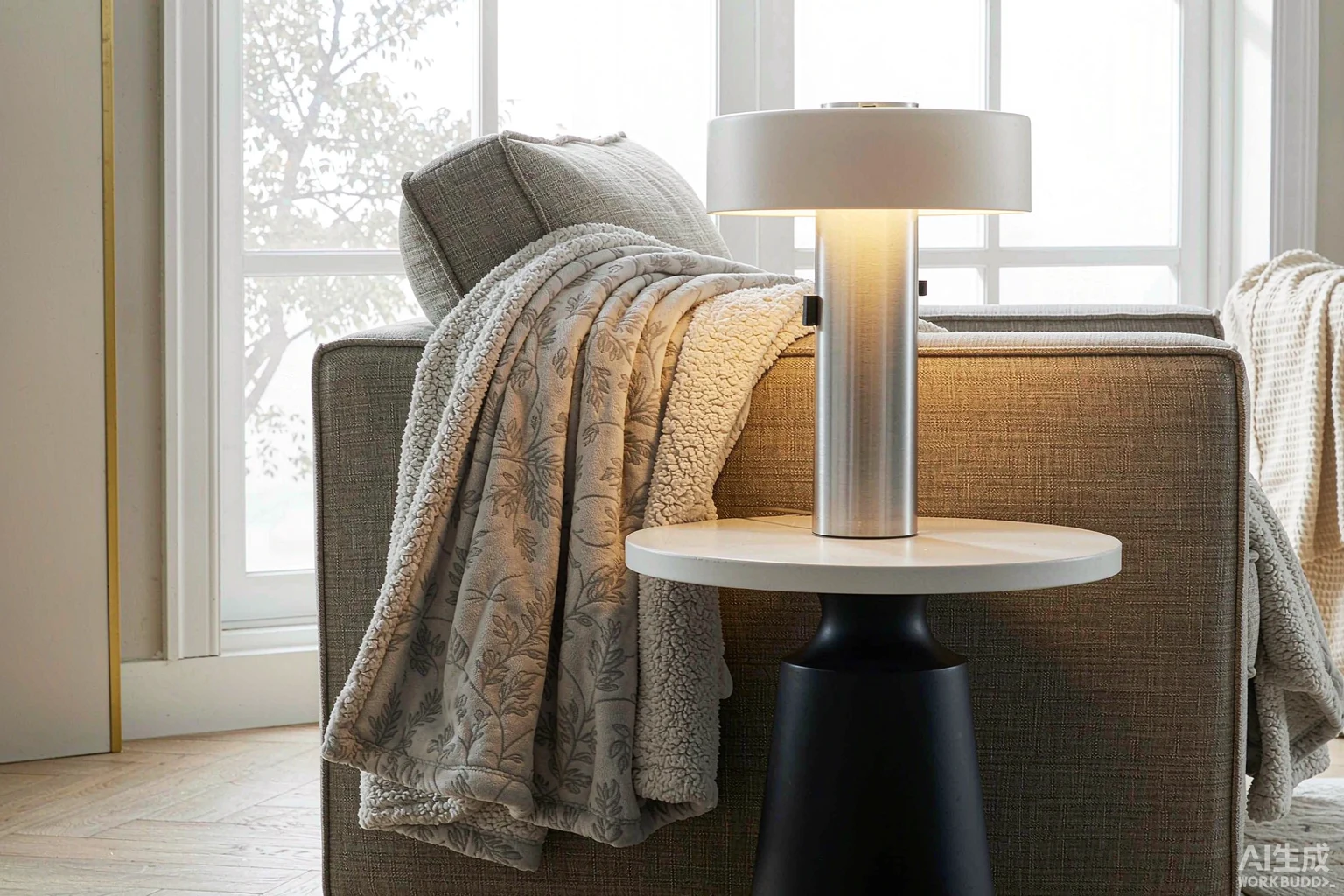
Every room has a first three seconds, and they happen at the entry: the console table, the key bowl, the lamp that greets whoever walks in. Buyers underinvest in this position systematically — the entry is too small for a furniture budget line, so it inherits whatever lamp was left over. Yet per watt and per dollar, the entry lamp does more work than any other piece in the home or the model unit: it sets the mood before anyone has sat down, it is the position guests photograph, and in model units and leasing offices it is doing sales work on behalf of the whole property. This article covers the specification: heights, footprints, the switch you want at the door, and the details that separate a considered entry from a leftover one.
Why the entry lamp punches above its size
Lighting at the entry does three jobs at once. It visually connects the indoors to the doorway — killing the gloom that makes even good rooms read dim from the threshold. It gives the eye an anchor: a warm pool on a console makes a small entry feel deliberate rather than neglected. And in the evening sequence, it is the light people reach for first and last, which means its control gets used more often than any other lamp’s in the house. Our lobby and reception guide makes the same argument for commercial first impressions; residential entries run the identical psychology at a smaller scale.
The height rule and the console math
The entry lamp follows the same height discipline as any table lamp, with one adjustment: sight lines. A console lamp is seen standing up, passing by, not seated — so the common error is going too short, producing a lamp that disappears behind the key bowl and the mirror frame. The shade’s bottom edge should clear the console top generously and the composition should read from standing height. Our table lamp height guide covers the underlying math; entries reward the taller end of the table-lamp range rather than the middle.
Proportion is the second half of the math. Consoles run narrow, so the lamp’s footprint competes with everything else living there — trays, keys, mail. A slim, stable base with a moderate shade wins over a wide dramatic silhouette; the entry wants presence without area. Our small space floor lamp guide makes the footprint argument for the room’s other corner; consoles are where the discipline starts.
The switch question: what belongs at a door
The entry lamp’s control is used while carrying things, in the dark, at the end of a day — which disqualifies several otherwise fine options. Pull chains tangle with coats. Touch controls misfire with wet hands. Remote controls live in the drawer by the towel station of every busy household. The controls that survive door duty are the simplest: an in-line switch reachable without leaning into the console, or a knob or twist on the lamp body itself. Our lamp control types comparison ranks them all; the entry is where the ranking matters most.
One more door-duty detail is easy to miss: the outlet situation. Entries are the least outlet-dense room in most properties, and the console position always wants power for more than the lamp — a charger, at minimum. A lamp that includes USB charging turns the console into the household’s practical landing strip, which is why charging-integrated table lamps have quietly become a model-unit favourite.
Warmth and colour temperature at the threshold
The entry is the one position where colour temperature does mood work disproportionate to its lumens. A cool white entry reads as an office vestibule; a warm one reads as home before anyone has seen the rest of the space. The practical rule: keep the entry lamp at the warm end of the range, and if the programme mixes sources, standardise the entry’s warmth explicitly rather than letting it inherit whatever bulb was nearby. Our choosing included bulbs guide covers the bulb specification side; the entry is the room where specifying the included bulb is worth the line item.
Buying the entry position at programme scale
For model units, leasing offices, boutique lobbies and staged homes, the entry lamp is bought in small counts but repeated across many units — which makes it a natural fit for mixed-SKU programme buying: the entry position’s model rides on the same order as the living room’s floor lamp and the bedrooms’ nightstand pairs, at one finish standard. Anrotix stocks the range in the United States — our portable-luminaire range is built to ETL listed to UL 153 and CSA C22.2, 120V with E26 bases and US plugs, orderable from ten units with mixed SKUs and shipped complete with bulbs. Send your unit count and console dimensions to help@anrotix.cn and we will match the entry position, quote the set, and keep every unit’s first three seconds identical.
Frequently asked questions
What height should a console table lamp be?
Taller than a nightstand lamp. A console lamp is seen from standing height and passing by, so the shade should clear the console top generously and read from eye level while standing — the common error is choosing too short and letting the composition disappear.
Which lamp switch type works best at an entry?
The simplest ones: an in-line switch reachable without leaning in, or a knob on the lamp body. Pull chains tangle with coats, touch controls misfire with wet hands, and remotes end up lost — the entry lamp’s control is used while carrying things in the dark.
Why do model units often choose USB-charging table lamps for entries?
Entries are the least outlet-dense room and the console always wants power for more than the lamp. A USB-charging table lamp turns the console into a practical landing strip — charger included — which is why it has become a model-unit favourite.
Sourcing lamps for your business?
We stock the Anrotix range in the United States — complete with LED bulbs and accessories — and supply from 10 units, mixed across SKUs.
Request wholesale pricingRelated product: the wood table lamp with USB charging — a console-duty lamp whose USB port earns its outlet in a busy entry
Recruiting regional partners worldwide — help@anrotix.cn