Last reviewed: Sep 15, 2026
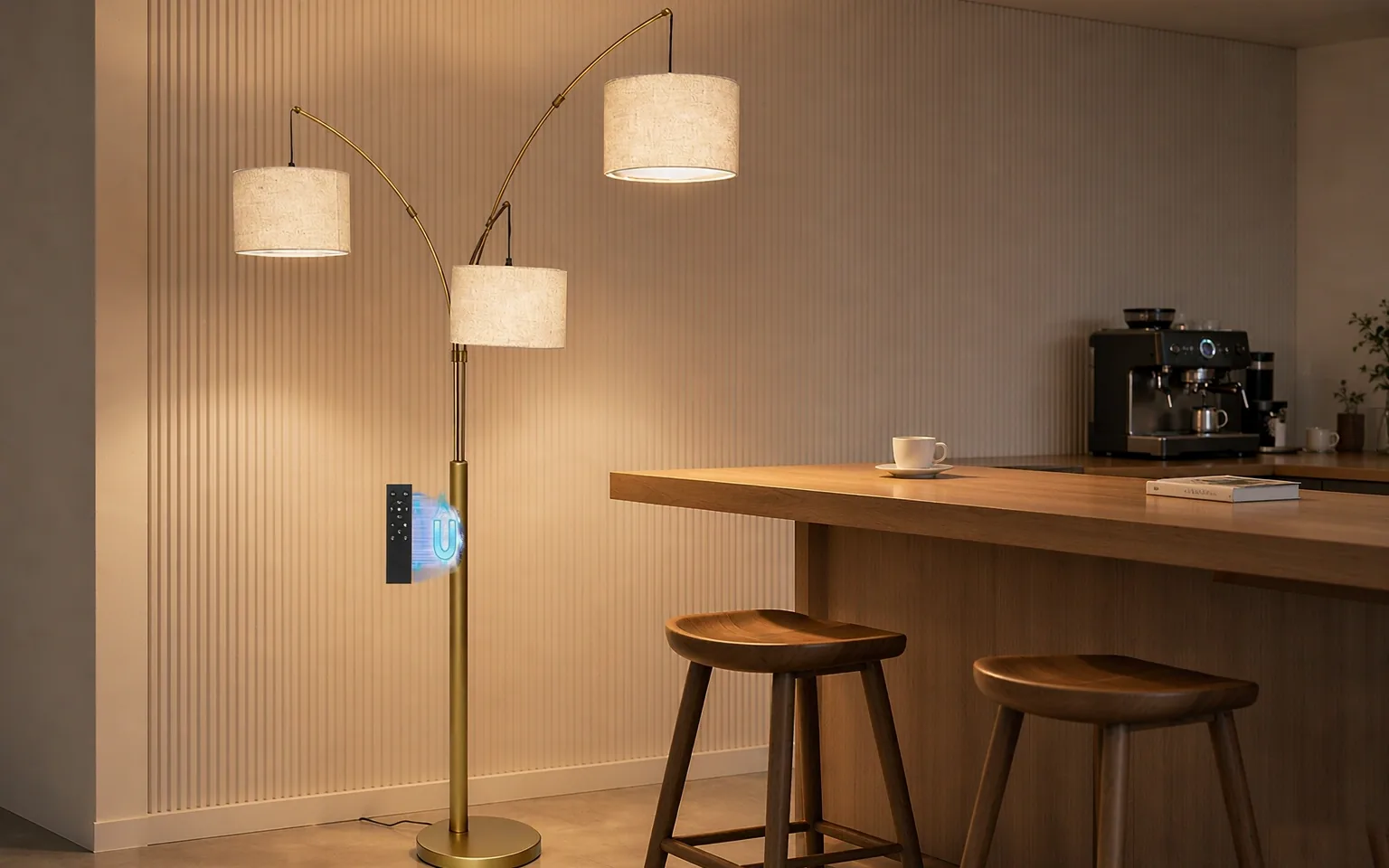
A buyer receives three quotes for a floor lamp. One is a unit price ex-works. One is landed to a dock. One includes a bulb, one does not. One is quoted at a container quantity and one at a pallet quantity. Comparing the headline numbers is meaningless, and choosing on them is how a programme acquires a cost structure nobody budgeted for.
Why the quotes differ before anyone is being difficult
Lamp quotes are built from a stack of choices that suppliers make differently by default. Whether the bulb is included, whether the carton is a retail carton or a bulk master carton, whether the price assumes a full container or a part load, whether the Incoterm puts the freight and the risk on the buyer, and whether the tooling for a custom colour has been amortised into the unit price or billed separately.
None of those is a trick. They are conventions, and each supplier tends to quote in the convention their other customers use. The buyer's job is to normalise them, not to suspect them.
The practical method is to build one levelling sheet and send the same sheet to every supplier as part of the request. Writing an RFQ That Gets a Real Quote: The Information Lamp Suppliers Actually Need covers the information to include; the levelling sheet is the other half of the same document.
The eight lines every levelled comparison needs
Those eight lines are the difference between a quote and a comparable quote. Suppliers who answer all eight promptly are also telling you something about how they will behave during the order.
- Unit price, with the quantity band it applies to stated explicitly.
- What is in the box: bulb included or not, shade included or not, assembly hardware, and the instruction sheet language.
- Incoterm and delivery point, so freight and risk sit with the same party on every quote.
- Carton configuration: units per master carton, and whether the price assumes full cartons.
- Lead time to dispatch, and the transit mode that lead time assumes.
- Payment terms, expressed as the actual cash profile: deposit, balance, and when each falls due.
- Validity: how long the price holds, and what triggers a re-quote.
- Defect and damage handling: what the supplier does about a broken unit, and who carries the freight on the replacement.
The costs that hide below the unit price
Freight is the obvious one, and How to Build a Landed Cost Model for a Lighting Order sets out how to model it properly. For lamps specifically, the two freight variables that matter most are carton length and dimensional weight, because portable lamps are long and light.
The second hidden cost is capital. A quote that requires a large deposit against a long lead time is not the same offer as a quote at the same unit price with net terms against domestic stock, even though the unit price is identical. Payment Terms in Lighting Sourcing: Deposits, Net Terms and What the Money Costs goes through that comparison in detail.
The third is the cost of being wrong. Small domestic orders let a buyer test demand before committing to a container. That optionality has a value, and The Purchase Price Is the Smallest Number: Total Cost of Owning a Lamp Line is the honest way to put it on the same page as the unit price.
A worked way to run the comparison
Level every quote to a single quantity, a single delivery point and a single configuration. Then add the freight estimate, then the capital cost of the deposit over the lead time, then an allowance for defects at the rate you actually experience rather than the rate you hope for. The number that comes out is the one worth comparing.
Then look at what the quote does not say. If a supplier will not state a dispatch time, will not say what happens to a damaged carton, or will not confirm what is included in the box, those silences are part of the offer and should be weighted accordingly.
Finally, compare the re-order path, not just the first order. A programme is a series of purchases, and the second one is where the relationship either works or does not.
For a quote that states all eight lines up front, email help@anrotix.cn with the models, the quantity band and the delivery point. Tiered pricing is quoted against quantity rather than published.
Frequently asked questions
Why do suppliers quote different Incoterms by default?
Because different customer bases expect different ones. A supplier selling mostly to importers quotes ex-works. A domestic stockist quotes delivered. Neither is unusual; the buyer simply has to normalise them before comparing.
Is the lowest levelled cost always the right choice?
No. Dispatch reliability, defect handling and reorder ease routinely outweigh a small unit price difference, particularly on a programme that will reorder for years.
How much does the included bulb really change the comparison?
Enough to matter. A lamp quoted without a bulb is not the same product as one quoted with a specified LED, and the difference affects colour temperature, rendering and the claims a retailer can make on the listing.
Sourcing lamps for your business?
We stock the Anrotix range in the United States — complete with LED bulbs and accessories — and supply from 10 units, mixed across SKUs.
Request wholesale pricingRelated product: the commercial terms up front — minimum order, dispatch timing, mixed-SKU orders and how a damaged carton is handled
Recruiting regional partners worldwide — help@anrotix.cn